



Our Magazine
Gérald Genta: The Man Who Shaped Modern Watchmaking

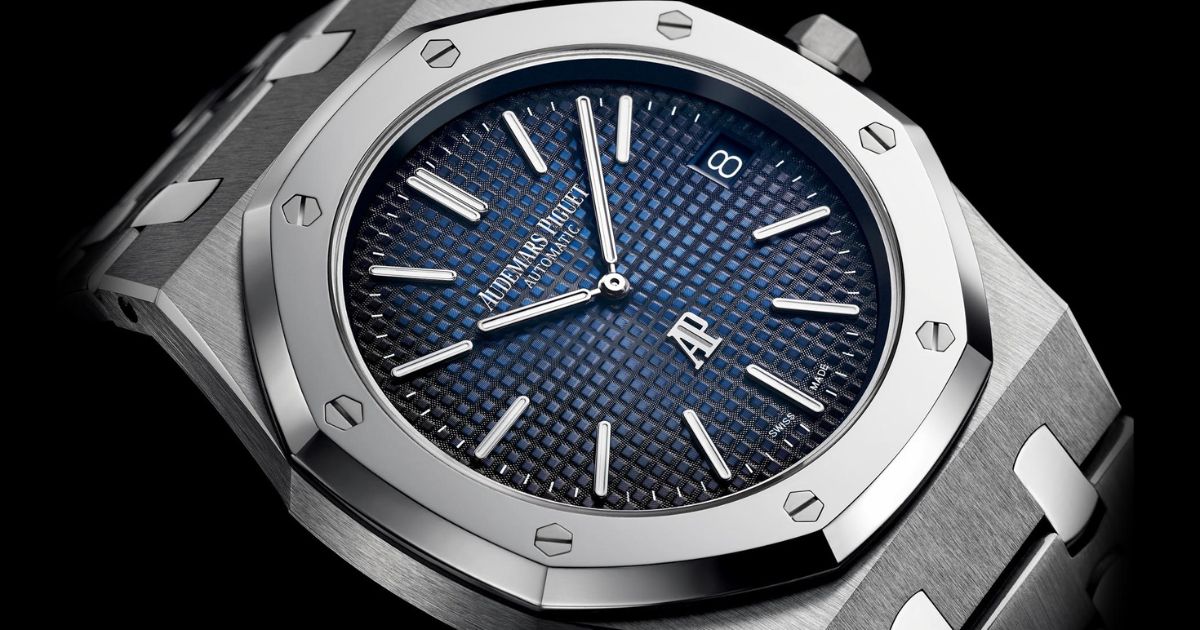
In the rarefied world of haute horlogerie, where tradition often reigns supreme, one man’s vision dared to break the mold, not once, but repeatedly. His name was Gérald Genta. To call him a watch designer is a profound understatement. He was an architect, a visionary, and a quiet revolutionary whose pencil sketches gave birth to the very archetypes of the modern luxury sports watch. While the industry was still captivated by round, delicate dress watches in the late 20th century, Genta imagined something radically different: wristwear that was bold, geometric, industrial, and unapologetically luxurious. This is the story of the man behind the icons—the Royal Oak, the Nautilus, and countless others—and how his fearless creativity irrevocably shaped the landscape of contemporary watchmaking.
The Artist’s Beginning
Born in Geneva in 1931, Gérald Genta was immersed in the world of craftsmanship from a young age. He trained as a jeweler and goldsmith at the École des Arts Industriels, developing a meticulous understanding of materials, form, and texture. This foundation was crucial. Unlike a pure industrial designer, Genta approached the watch as a three-dimensional sculpture, a piece of jewelry for the wrist that must harmonize aesthetics, ergonomics, and mechanical integrity.
He began his career in the 1950s, working anonymously for prestigious brands like Universal Genève and Omega. His early work was diverse, encompassing elegant dress watches and complicated timepieces. However, even then, his flair for the dramatic and the detailed was apparent. He mastered the art of the “pen sketch,” a fluid, confident style of drawing that captured not just the design, but its spirit and attitude. These sketches, often produced in a matter of minutes, became legendary.
The Disruptive Decade – Birth of the Icons
The 1970s were a period of crisis for the Swiss watch industry. The Quartz Revolution threatened the very existence of mechanical watchmaking. In this climate of uncertainty, brands took their biggest risks. And they turned to Genta.
- The Royal Oak (1972): The story is now horological folklore. Audemars Piguet, seeking a groundbreaking luxury sports watch, approached Genta the night before the Basel Fair. The brief: something “unprecedented.” Inspired by a traditional diver’s helmet—its octagonal bezel secured by eight visible bolts—Genta conceived the “Royal Oak” overnight. It was forged not from gold, but from steel, a material then considered inferior for high-end watches. Yet, it was finished with unprecedented complexity: brushed and polished surfaces, a integrated bracelet that flowed seamlessly from the case, and a price that rivaled precious metal timepieces. It was a scandal, and then a sensation. The Royal Oak defied every convention, proclaiming that luxury was defined not by material alone, but by concept, craftsmanship, and audacious design.
- The Nautilus (1976): Just a few years later, Patek Philippe sought its own answer. Genta’s inspiration this time came from a transatlantic ship’s porthole, its hinged construction reflected in the case’s distinctive, rounded-octagonal shape. The Nautilus (Ref. 3700) was sleeker, more fluid than the angular Royal Oak. Its case was a masterpiece of ergonomics, with two lateral “ears” that gave it a unique profile. Like the Royal Oak, it featured an integrated bracelet and a groundbreaking, ultra-thin mechanical movement for a sports watch. Genta had done it again, creating another genre-defining icon for a different venerable house.
These two watches did more than sell; they created entirely new categories: the “luxury sports watch” and the “steel sports watch.” They proved that in the age of quartz, mechanical watchmaking could offer something technology could not: enduring character, emotional design, and a powerful statement of identity.
Beyond the Big Two – A Prolific Legacy
While the Royal Oak and Nautilus are his most famous legacies, Genta’s influence was breathtakingly broad.
- The Ingenuity of Complications: For brands like IWC and Piaget, Genta designed revolutionary grand complication watches. The IWC “Grande Complication” for the brand’s 125th anniversary and Piaget’s ultra-thin, whimsically shaped “Polo” watch are testaments to his ability to frame high mechanics within bold, contemporary cases.
- Whimsy and Fantasy: Perhaps the most personal expression of Genta’s genius was his “Fantasy” collection, created under his own brand from the 1990s. These watches featured Disney characters like Mickey Mouse and Minnie Mouse performing retrograde minute indications and jumping hours. They showcased his playful side and his belief that high watchmaking could be joyful and accessible in spirit.
- The Constellation (1959) & The Polerouter (1954): Even before the 70s, his work for Omega (the iconic C-case Constellation) and Universal Genève (the Gerald Genta-designed Polerouter by a young designer named… Gérald Genta) were already modern classics.
The Genta Design Language – Lessons for the Learner
What defines a Gental design? As a student of watchmaking, look for these hallmarks:
- Architectural Cases: Watches are buildings for the wrist. Strong geometries, bold bezels, and complex case construction with multiple finishes.
- Integrated Bracelets: The bracelet is not an afterthought; it is an organic extension of the case, designed as one cohesive unit.
- Play of Finishes: Brutish brushed surfaces juxtaposed with gleaming polished bevels (the beautiful technique). This creates light, shadow, and texture.
- Visual Hierarchy: Clear, legible dials often enhanced by signature textures (“tapisserie,” horizontal grooves, classic vertical clous de Paris).
- The “Genta Curve”: A profound understanding of how a watch wraps around the wrist. His cases often have a subtle, ergonomic curvature that makes even large watches wear comfortably.
Conclusion: The Unquiet Legacy
Gérald Genta passed away in 2011, but his shadow looms larger than ever. The watches he designed in the 70s are not just museum pieces; they are the most coveted, influential, and defining models of the 21st-century watch market. Every contemporary integrated sports watch pays homage to his vision.
More importantly, Genta taught the industry a vital lesson: true innovation in watchmaking is as much about emotional design and cultural relevance as it is about technical prowess. He bridged the gap between the tool watch and the jewel, between industry and art. He gave watchmakers the courage to be bold and collectors the vocabulary to appreciate architecture on the wrist.
So, the next time you admire the audacious bezel of a Royal Oak, the porthole silhouette of a Nautilus, or even the playful dance of a retrograde Mickey Mouse hand, remember the man with the pencil. Gérald Genta didn’t just design watches; he designed the modern era of watchmaking itself.