

Our Magazine
The Royal Oak: How a Luxury Sports Watch Changed the Game

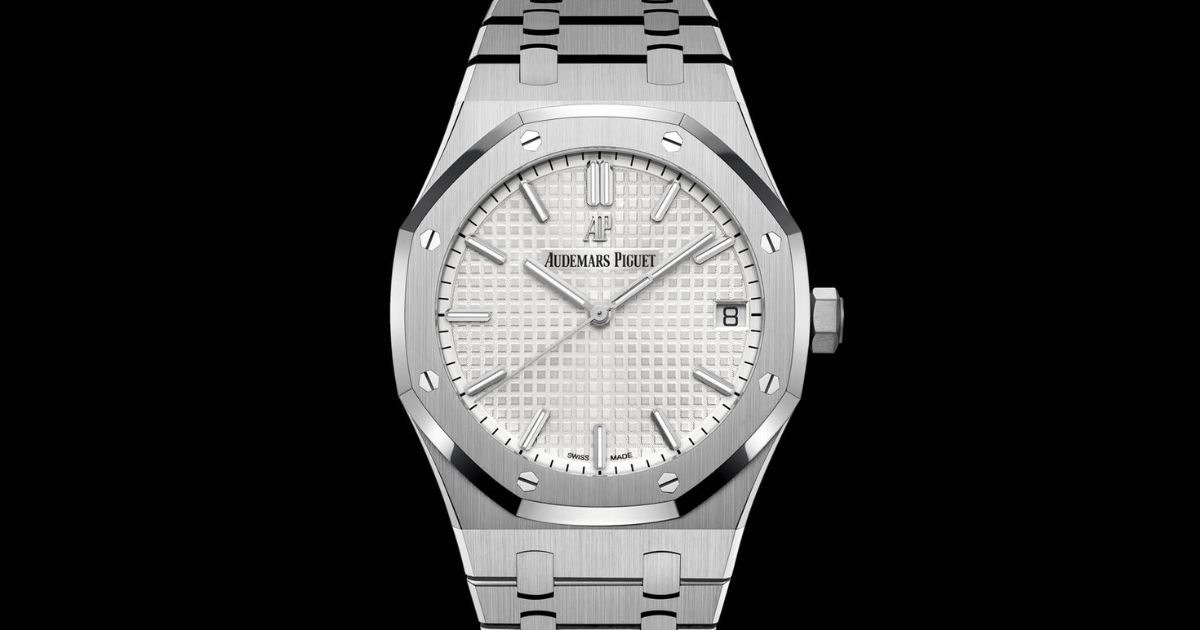
If you wander into any high-end watch boutique today, you’ll be met with a dazzling array of stainless steel sports watches. Sleek, sophisticated, and commanding long waiting lists, they represent the heartbeat of modern luxury watch collecting. Yet, this entire category—and arguably the very notion of the luxury sports watch—owes its existence to a single, seismic creation: the Audemars Piguet Royal Oak. Its story isn’t just about a timepiece; it’s a masterclass in audacity, design, and surviving against all odds.
The Prelude: A World of Gold and Formality
To understand the Royal Oak’s revolution, we must first picture the landscape it entered. In the early 1970s, Swiss watchmaking was reeling. The quartz crisis, sparked by affordable, hyper-accurate Japanese electronic watches, was beginning to erode the foundations of traditional mechanical watchmaking. Meanwhile, the idea of a “luxury watch” was narrowly defined. High-end timepieces were crafted from precious metals—gold or platinum. They were symbols of dress and occasion, often kept in boxes and worn for formal events. A watch made of steel, considered a utilitarian and industrial material, had no place in the upper echelons of horology. Sporty watches existed, but they were tools—robust instruments for diving, racing, or exploration, not objects of haute luxury.
Audemars Piguet, a revered but smaller family-owned manufacturer in Le Brassus, Switzerland, found itself on the brink. The need for a radical solution was desperate. That solution would come from an unprecedented collaboration between an avant-garde Italian designer and a daring executive.
The “Jumbo” A-Series: A Shock in Steel
In 1972, the Royal Oak Ref. 5402ST was unveiled. The reaction was not just surprise; it was shock, even ridicule. Let’s break down why this “Jumbo” was so revolutionary:
- The Material & Price: It was made entirely of brushed stainless steel. Yet, Audemars Piguet positioned it at a price point that exceeded many of their gold watches. This was an unthinkable proposition: charging a fortune for steel. The justification? The incredible cost of machining and finishing that steel.
- The Design & Craftsmanship: The design, by the legendary Gérald Genta (who famously sketched it overnight), was unlike anything before it. Its defining feature was the octagonal bezel, secured by eight visible hexagonal white-gold screws. This bezel was inspired by the portholes of old deep-sea diving helmets, hence the nautical name “Royal Oak.” The screws were not faux; they were functional, adding a bold, industrial aesthetic.
The case and integrated bracelet were a masterpiece of complexity. The bracelet alone, with its hundreds of meticulously hand-finished links, tapered fluidly and required over 40 hours of craftsmanship. The tapisserie pattern on the dial—a small geometric grid—added texture and depth. This was high watchmaking finishing applied to a “sports” model. - The Proposition: The Royal Oak wasn’t a tool. It was a statement. It declared that a watch could be robust, water-resistant (to 120 feet, a feat then), and worn daily, while simultaneously being a peerless object of luxury, art, and technical refinement. It was a watch for the emerging, dynamic elite—the entrepreneur, the visionary, the person who lived life actively, not just formally.
Weathering the Storm: From Pariah to Icon
The initial years were tough. Critics dubbed it the “Jumbo” not as a term of endearment, but for its then-substantial 39mm size. Many in the conservative watch world scoffed. But slowly, a cult following emerged. Discerning buyers recognized its unique blend of bravado and refinement. It was the watch for those who wanted to be recognized by others in the know.
The Royal Oak’s true genius was its versatility. It was equally at home with a tailored suit as it was with a casual blazer or even a polo shirt. It broke down the wardrobe barriers between sport and elegance. Furthermore, by surviving the darkest days of the quartz crisis, it became a symbol of mechanical watchmaking’s enduring soul. It proved that artistry, emotion, and identity could triumph over mere electronic efficiency.
The Game Changed: The Royal Oak’s Lasting Legacy
The Royal Oak didn’t just find success; it created a new universe. Its impact is visible in every corner of contemporary watchmaking:
- Creating a Category: It single-handedly invented the “luxury sports watch” genre. It paved the way for every other integrated-bracelet steel superstar that followed, most notably the Patek Philippe Nautilus (also designed by Genta) and the Vacheron Constantin Overseas. The “Holy Trinity” of watchmaking all now had their steel champions, thanks to the Royal Oak’s trailblazing.
- Material Alchemy: Audemars Piguet continued to push boundaries, experimenting with materials like titanium, ceramic, and forged carbon in the Royal Oak, further cementing its innovative, high-tech luxury status.
- The Cult of the Design: The Royal Oak’s design is so strong that it has remained virtually unchanged for over 50 years. Incremental updates in movement technology (like the introduction of the ultra-thin automatic Calibre 2121 and its successors) and dial variations have occurred, but the core DNA is sacrosanct. This design continuity is a pillar of its icon status.
- The Modern Grail: Today, the Royal Oak, especially the perpetual calendars, tourbillons, and ultra-thin “Jumbo” Extra-Thin models, sits at the pinnacle of many collectors’ dreams. It represents a perfect storm of history, design, and prestige.
A Lesson in Horological Course
For the watch learner, the Royal Oak is more than a must-know reference. It is a case study in how to challenge conventions. It teaches us that luxury is not defined by the material alone, but by the vision, craftsmanship, and audacity behind it. It showed that a watch could be an integral part of a dynamic lifestyle without sacrificing an ounce of prestige.
In a world now saturated with luxury steel sports watches, it’s easy to forget how radical the proposition once was. The Royal Oak was a gamble that saved a storied manufacture and forever altered the trajectory of an entire industry. It’s not just a watch that changed the game; it wrote the rulebook for the modern luxury watch era. To wear a Royal Oak is to wear a piece of history—a monument to the moment horology dared to be different, and in doing so, found its future.