

Our Magazine
The Jaeger-LeCoultre Memovox: The Watch That Woke a Generation

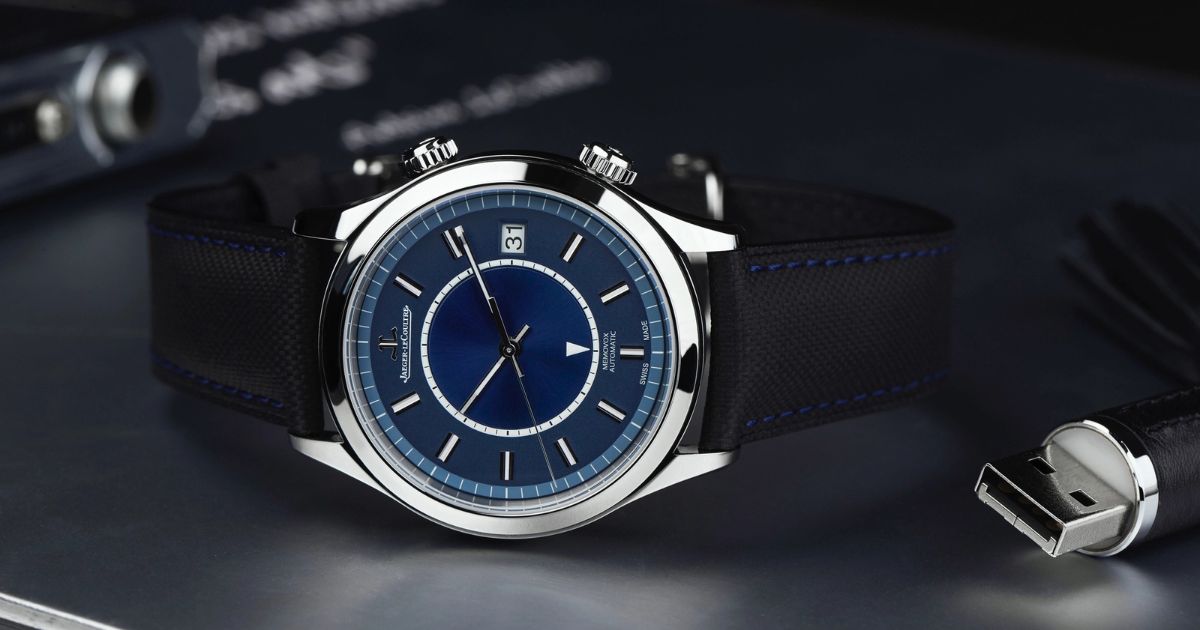
In the world of luxury watchmaking, few names command as much respect as Jaeger-LeCoultre. Nestled in the Vallée de Joux, this maison has been the “watchmaker’s watchmaker” for nearly two centuries, producing some of the most ingenious and beautiful movements ever conceived. Yet, among its pantheon of icons—the Reverso, the Atmos, the Master Control—there exists a timepiece that didn’t just tell time. It spoke. It announced itself with a gentle, insistent hum, a mechanical alarm that made it a partner in the daily rhythm of life. This is the story of the Jaeger-LeCoultre Memovox, the watch that woke a generation.
From Tool to Icon: The Birth of an Alarm Watch
The idea of a wristwatch with an alarm function wasn’t entirely new in the 1950s, but it was a rarity, often clunky and unreliable. Jaeger-LeCoultre, with its profound technical prowess, saw an opportunity to refine this complication for the modern, active gentleman. In 1950, they introduced the Memovox—a portmanteau of the Latin “memo” (I remember) and “vox” (voice). It was the world’s first wristwatch alarm designed for civilian use, not as a military or professional tool.
That first model, reference E489, was a modest steel watch with a manually-wound Calibre 489. Its “voice” was a simple hammer striking a tiny disc inside the caseback. But the seed was planted. The real revolution came in 1956 with the launch of the Memovox Park, followed by the iconic Memovox World Time in 1958. Here, JLC didn’t just create an alarm; they created a travel companion for the jet set. The World Time version featured a rotating inner dial with 24-hour markers and major city names, allowing the wearer to track multiple time zones, while the alarm could be set to ring at a crucial moment—a wake-up call in a foreign hotel, a reminder for a key meeting in another continent.
The Golden Age: The Memovox “Polaris” and the Mechanical Symphony
The 1960s marked the absolute zenith of the Memovox. This decade gave us the most collectible and aesthetically distinct models, powered by the robust automatic Calibre 815/911 series. Watches like the Memovox “Deep Sea” and the Memovox “E 859” (with its charismatic “crosshair” dial) became symbols of mid-century cool. They were bold, functional, and undeniably stylish.
But the crown jewel, the model that embodies the very soul of the Memovox’s purpose, is the Memovox Polaris (1968). Designed as a serious tool watch for aquatic sports, the Polaris was a marvel of case engineering. It featured a unique triple-caseback system: an inner case, a sound-deadening middle case, and a perforated outer case. This design channeled and amplified the alarm’s vibration directly into the water, making it audible to a diver underwater—a breathtakingly clever solution. Its stark, legible dial with three internal rotating discs (alarm, hours, minutes) is a masterpiece of information design. The Polaris wasn’t just a watch; it was a wearable piece of industrial genius.
How It Works: The Heart of the Memovox
For learners, the magic of the Memovox lies in its mechanics. Unlike a simple date complication, an alarm watch requires a completely independent second gear train and energy source.
- The Two Mainsprings: A standard automatic watch has one mainspring barrel for timekeeping. The Memovox has two. One powers the timekeeping functions (hours, minutes, seconds), and the other is dedicated solely to the alarm mechanism.
- Setting the Alarm: You turn a separate crown (usually at 2 o’clock) to set the alarm hand on the dial to your desired time.
- Winding the Alarm: You pull the alarm crown out to wind its dedicated mainspring. The amount of wind determines the duration of the ring (typically 10-20 seconds of buzzing).
- The Trigger and The Song: As the timekeeping hands catch up to the alarm hand, a lever releases. The alarm mainspring’s energy is transferred to a tiny hammer, which rapidly strikes a spring or a disc attached to the inside of the caseback. This creates the iconic brrrrrring—a mechanical buzz that is tactile, intimate, and utterly charming.
This intricate dance of gears and springs is a testament to JLC’s ability to miniaturize and perfect complex mechanics.
The Voice of an Era: Cultural Resonance
The Memovox’s success was perfectly timed. It arrived as the post-war world embraced mobility, business, and leisure travel. The Memovox was the watch for the executive catching an early flight, the diplomat moving between time zones, or the sportsman timing his dive. It was a personal assistant on the wrist, a symbol of a life in motion that needed managing. Its sound was a private signal in a public world—a mechanical nudge in an age before digital reminders.
The Legacy: Modern Interpretations
After a period of quiet in the quartz era, Jaeger-LeCoultre proudly revived the Memovox in the 1990s and has continued to develop it within its Master and Extreme lines. Modern Memovox watches, like the Master Memovox, offer enhanced water resistance, refined finishing, and the superb automatic Calibre 956. Yet, they faithfully retain the soulful alarm complication and the classic two-crown design.
Most poignantly, JLC has paid direct homage to its legend with the contemporary Polaris Memovox (released in 2008 and later). This watch is a near-perfect reinterpretation of the 1968 original, preserving that iconic triple-caseback construction and layered dial, but built to 21st-century standards. It proves that the Memovox’s design language and purpose are timeless.
Conclusion: More Than a Complication
Collecting and understanding the Jaeger-LeCoultre Memovox is about more than acquiring a watch with an alarm. It is about owning a piece of human-centric design history. In an era of silent smartwatch notifications, the Memovox offers something profoundly authentic: a tangible, mechanical connection to a moment you asked it to remember.
It is a watch that engages both sight and sound. It asks for interaction—you must wind its alarm, set its hand, listen for its call. It represents a golden age of watchmaking when complications solved real-world problems with elegant, mechanical poetry.
The Jaeger-LeCoultre Memovox didn’t just tell time; it reminded people to live it. It woke a generation to their appointments, their flights, their adventures. And in doing so, it forever earned its name: the watch with a voice. A voice that continues to hum its gentle, unforgettable song across the decades.