


Our Magazine
A Beginner’s Guide to Understanding Watch Dials

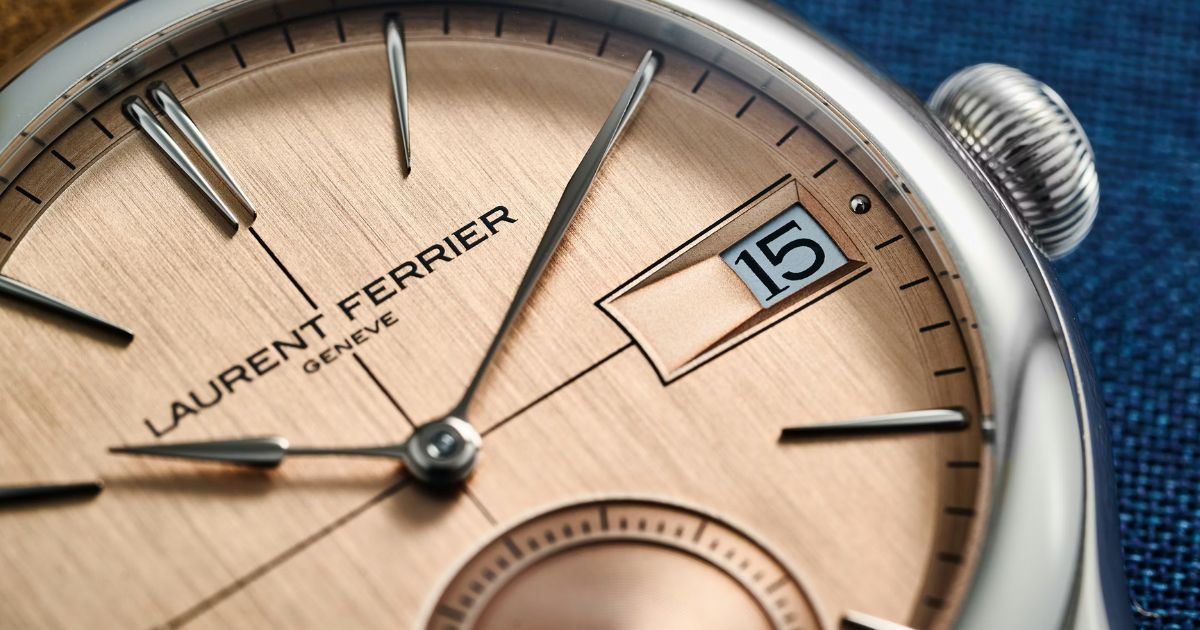
Welcome, watch enthusiasts, to another deep dive into the intricate world of horology. Today, we’re focusing on the very soul of a wristwatch—the dial. More than just a pretty face, the dial is the command center of a timepiece. It’s where art meets engineering, where brand identity is forged, and where a vast amount of information is communicated. For a beginner, understanding the components and language of a watch dial is the first step toward truly appreciating a watch. Let’s embark on a journey to decode its secrets.
The Canvas: Dial Base and Materials
The dial, also called the face, is the surface under the crystal. Its base material sets the stage for everything else. Common materials include:
- Brass: The industry workhorse, often plated with gold, rhodium, or other finishes for color and corrosion resistance.
- Solid Gold: A mark of luxury, used in high-end pieces, often paired with exquisite craftsmanship.
- Enamel: A hallmark of traditional artisanal work. Grand Feu enamel is fired at extremely high temperatures, creating a deep, luminous, and virtually indestructible finish. Cloisonné and champlevé involve intricate metalwork filled with colored enamel.
- Mother-of-Pearl: Sourced from the inner lining of shells, it offers a unique, iridescent shimmer, often used in elegant and feminine designs.
- Meteorite: Slices of genuine Gibeon or Muonionalusta meteorite, displaying a unique Widmanstätten pattern—a testament to both cosmic history and earthly craftsmanship.
- Carbon Fiber & Technical Materials: Used in modern and sports watches for their lightweight, durable, and avant-garde aesthetic.
The Actors: Hands and Indices
This is the primary system for telling time.
- Hands: Their shape and style are crucial to a watch’s personality.
- Baton/Stick: Simple, modern, and clean.
- Feuille (Leaf): Elegant and tapered, often found on dress watches.
- Breguet: Classic and distinguished, with a hollow, moon-shaped tip.
- Mercedes: A robust, lumed hand style famously associated with Rolex sports models.
- Skeleton: Hands with their centers cut out, revealing the dial beneath.
- Lance (Spear) and Dauphine: Angular and faceted, designed to catch the light.
- Indices (Hour Markers): These can be applied or printed.
- Applied Indices: Three-dimensional markers, often machined from metal and fixed to the dial. They create depth and reflect light beautifully. They can be simple batons, elegant Roman numerals, or even diamond-set.
- Printed Indices: Ink or lume painted directly onto the dial. Common on more utilitarian or vintage-inspired pieces.
- Mixed Systems: A “12-6-9” configuration or a combination of indices and numerals (e.g., Roman at XII and VI) is a classic layout.
The Ink: Printing and Finishing
The text and minute tracks on a dial tell the story of the watch. Printing can be flat, or raised for a tactile feel. The quality of printing—its sharpness, alignment, and consistency—is a key indicator of craftsmanship.
Finishes add texture and character:
- Sunray Brushing: Radiating lines that seem to “burst” from the center, changing color with light.
- Guilloché: An intricate, mechanically engraved pattern (like clous de Paris, barleycorn, or waves) that plays with light. Traditionally done on a rose-engine lathe, it’s a sign of high artisanal skill.
- Matte: A non-reflective, flat finish, prized for legibility in tool watches.
- Grained or Textured: Adds a subtle, often vintage-inspired feel.
The Night Shift: Luminescence
Known as “lume,” this is the material that glows in the dark. It’s applied to hands and indices.
- Traditional: Tritium was used historically but is radioactive. Super-LumiNova and LumiBrite are modern, non-radioactive photoluminescent materials that charge with light and emit a strong glow.
- Advanced: Some brands use tritium gas tubes (like Ball’s H3) that provide a constant, long-lasting glow without needing a charge.
Beyond Hours and Minutes: Complication Displays
The dial is also where complications (functions beyond telling time) are displayed.
- Date: The most common. Can be a simple window (often at 3 o’clock), a sub-dial, or a pointer date on the periphery.
- Day-Date: Shows both the day of the week and the date.
- Chronograph: A stopwatch function. Typically uses sub-dials (totalizers) for elapsed seconds, minutes, and hours. The iconic tachymeter scale on the bezel or dial edge is used to calculate speed.
- GMT/Dual Time: Features an additional hand (often in a distinctive color) to track a second time zone, paired with a 24-hour scale.
- Moonphase: A poetic aperture showing the current phase of the moon through a rotating disc.
- Power Reserve Indicator: A gauge showing how much winding tension remains in the mainspring, crucial for manual-wind watches.
The Details That Define: Signatures and Windows
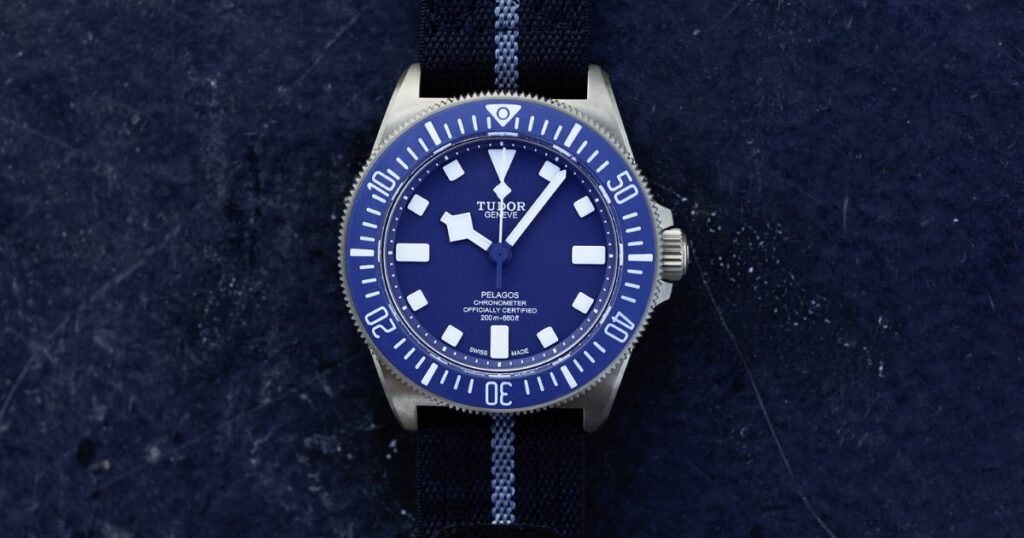
- Brand & Signatures: The logo, name, and origin (“Swiss Made”) are prominent. On higher-end pieces, you might see “Automatic” (self-winding), “Chronometer” (signifying certified precision, often by COSC), or specific model names.
- Apertures: These are windows cut into the dial. Besides date windows, you might see a skeletonized portion revealing the balance wheel (the heart of the movement) in action—a feature called an open heart dial.
Putting It All Together: Reading the Language
When you look at a dial now, you can start to “read” it:
- Identify the Style: Is it a minimalist dress watch (simple baton hands, applied indices, clean dial)? A tool diver (large lumed markers, bold hands, matte finish, bezel scale)? A pilot’s watch (high-contrast, legible, often with flieger triangle at 12)?
- Assess Legibility: Can you tell the time at a glance, day or night? This is the primary functional test.
- Appreciate the Harmony: Do the hands, indices, fonts, and colors work together cohesively? Is there a sense of balance and proportion?
- Discover the Story: What does the dial tell you? The “Chronometer” text speaks of precision testing. A “Grand Feu” enamel dial whispers of centuries-old craftsmanship. A multi-layered, textured dial with multiple sub-dials shouts technical prowess.
Conclusion: Your Window to Horology
The dial is your primary interface with the mechanical marvel on your wrist. Understanding its components—from the base material to the shape of the hands, from the lume to the complication displays—transforms how you see and appreciate a watch. It moves from being an accessory to a piece of narrative art and engineering.
So, the next time you admire a timepiece, take a long, thoughtful look at its face. You’ll be surprised at how much it has to say.