


Our Magazine
Audemars Piguet Royal Oak Offshore vs. Hublot Big Bang: The “Beastly” Rivalry

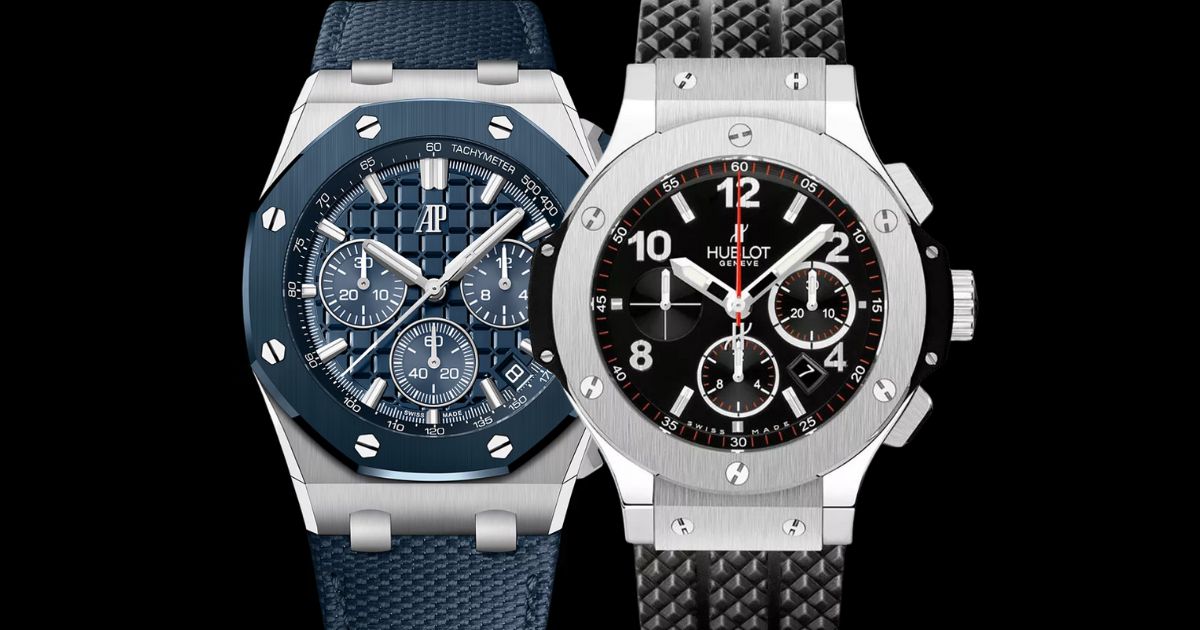
In the realm of luxury sports watches, few debates stir as much passion as the one between the Audemars Piguet Royal Oak Offshore and the Hublot Big Bang. They are the modern titans of “beastly” horology—watches that are unapologetically bold, technically audacious, and dripping with attitude. This isn’t a quiet conversation about dress watches; it’s a roaring debate about wrist presence, innovation, and the very definition of a 21st-century luxury icon.
For the enthusiast, choosing between these two isn’t just about picking a watch; it’s about aligning with a philosophy. Today, we dive deep into this epic rivalry, dissecting their DNA, their innovations, and their undeniable charisma.
The Origin Story – Progenitor vs. Prodigy
The story begins with a seismic event: the 1972 launch of the Audemars Piguet Royal Oak. Designed by the legendary Gerald Genta, it redefined luxury by forging it from steel. Its integrated bracelet, iconic octagonal bezel with exposed screws, and “Tapisserie” dial created the blueprint for the luxury sports watch.
The Royal Oak Offshore, born in 1993, was the rebellious offspring. Dubbed “The Beast” by AP’s own CEO at the time, it took the Royal Oak’s elegance and pumped it with steroids. It was larger (a then-massive 42mm), thicker, more muscular, and unafraid of color and texture. It transformed the refined sports watch into a statement of power and performance, directly targeting a younger, more dynamic audience.
Enter Hublot. In 1980, founder Carlo Crocco created the original Hublot (“porthole” in French) with a gold case on a rubber strap—a radical fusion of materials. But the true game-changer arrived in 2005: the Big Bang. Designed under the visionary Jean-Claude Biver, the Big Bang didn’t just enter the ring; it exploded into it.
Its genius was in its construction. The Big Bang’s multi-layered “sandwich” case, visible screws on the bezel, and explosive mix of materials (ceramic, titanium, rubber, gold, carbon, you name it) felt immediately contemporary. It was a direct, unapologetic challenge to the established order. While the Offshore had pioneered the “beast” category, the Big Bang perfected the art of the “fusion” concept within it.
Key Takeaway: The Offshore is the evolution of a classic, carrying the weight of heritage on its broad shoulders. The Big Bang is the revolution, a cleaner-slate approach built for the new millennium.
Design Language – Heritage Muscle vs. Avant-Grade Fusion
Hold these two watches side by side, and their philosophical differences are instantly visible.
Royal Oak Offshore: Its design is an exercise in controlled aggression. You can always see the original Royal Oak’s DNA. The octagonal bezel is secured by eight hexagonal white gold screws, a sacred code. The “Méga Tapisserie” dial is more pronounced, but it’s a clear descendant. The case, while massive, retains a certain sculptural integrity, with flowing lines from the case through to the integrated bracelet (often fitted with rubber accents). It says, “I am powerful, but I come from nobility.”
Hublot Big Bang: This is architectural and modular. The case is a composite of three main parts, often in contrasting materials and finishes. The bezel is held by iconic H-shaped screws, a signature element. The dial is a playground for textures, from satin-finished to openworked “skeleton” designs that showcase the mechanics. The lugs are distinct and connect to a wide variety of straps via a quick-change system. It says, “I am a laboratory of materials and a canvas for innovation.”
Key Takeaway: The Offshore’s design is genealogical; its beauty lies in its recognizable lineage. The Big Bang’s design is modular and industrial; its beauty lies in its limitless combinations and technical aesthetic.
The Heart of the Beast – Movement & Technical Philosophy
Both house exceptional, high-end movements, but their approaches differ.
Traditionally, Audemars Piguet has leveraged its profound in-house mastery. Modern Offshores often feature calibers like the self-winding 3126/3840 or the phenomenal 4401 series flyback chronograph. The focus is on finishing that meets the highest traditional standards: beautiful anglage, polished bevels, and Geneva stripes, all visible through the sapphire case back. It’s raw power dressed in a tuxedo.
Hublot, while also producing magnificent in-house movements like the Unico chronograph (notable for its column wheel on the dial side), has made “fusion” its technical mantra. This extends beyond case materials to the movement itself. They pioneered the use of materials like Magic Gold (scratch-resistant gold), and have heavily invested in high-tech ceramics, carbon fiber, and even sapphire for cases. Their innovation is as much about what the watch is made from as it is about the complication inside.
Key Takeaway: AP Offshore emphasizes horological artistry within a robust package. Hublot emphasizes material science and technical innovation as horology.
On the Wrist – The Wearing Experience
Both are substantial watches, but they wear differently.
The Offshore, especially on its integrated bracelet, feels like a single, cohesive unit. It has a heft and presence that is undeniable, yet its ergonomics—honed over decades—often make it wear more comfortably than its dimensions suggest. It commands respect with a degree of restraint.
The Big Bang, with its flatter case profile and frequently lighter advanced materials (like titanium or carbon), can sometimes feel more “plaque-like” on the wrist. Its quick-change strap system is a masterstroke of practicality, allowing you to switch from rubber to leather to fabric or even a bracelet in seconds, radically altering its character. It’s about versatility and modern convenience.
The Verdict: A Choice of Tribes
So, which “beast” reigns supreme? The truth is, they cater to subtly different facets of the same bold personality.
Choose the Audemars Piguet Royal Oak Offshore if:
- You revere watchmaking history and appreciate a design that evolves a legendary icon.
- You value the depth of in-house movement finishing and a cohesive, sculptural case design.
- Your style is powerful yet has a classic foundation. You are making a statement that is connected to 50 years of horological prestige.
Choose the Hublot Big Bang if:
- You are drawn to avant-garde design, material innovation, and a more modular, architectural look.
- You love the freedom to change your watch’s personality instantly with straps and crave the latest in case materials (ceramic, sapphire, carbon).
- Your style is unapologetically modern, bold, and leans into the “fusion” of high-tech and high-luxury.
Ultimately, the “beastly” rivalry isn’t about finding a winner. It’s about celebrating two paths to a similar goal: creating the ultimate expression of masculine, complicated, and contemporary luxury on the wrist. The Royal Oak Offshore is the king that learned to roar. The Hublot Big Bang is the revolutionary that built a new kingdom. Your wrist, your philosophy, your choice.