


Our Magazine
Carbon vs. Ceramic: The Battle of the Modern Watch Materials

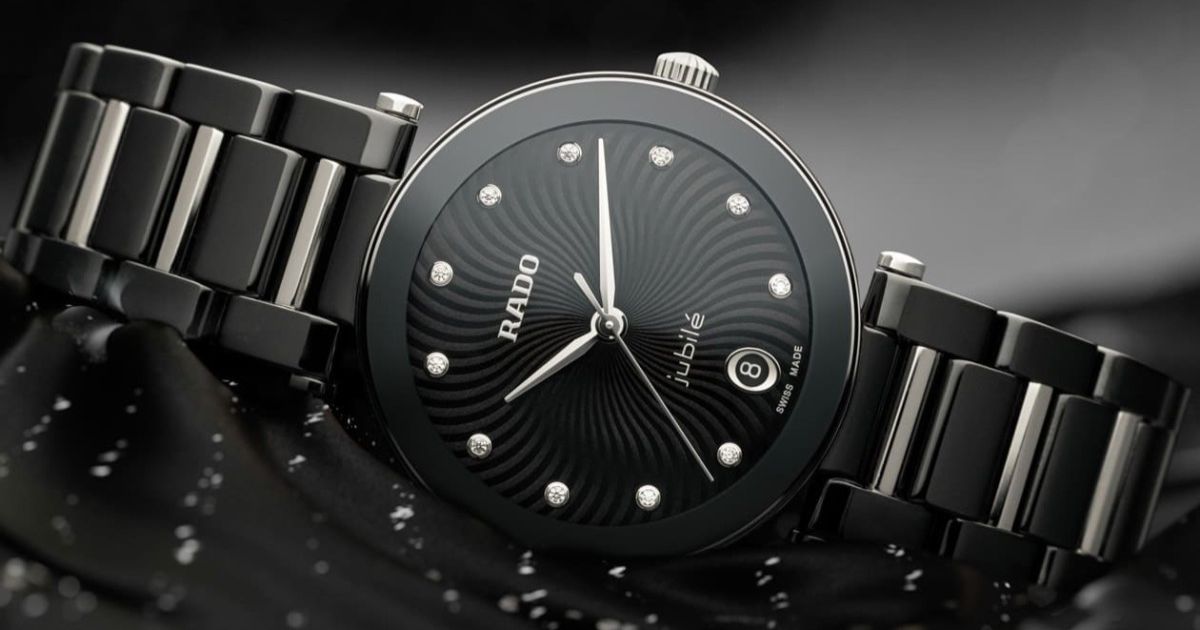
For centuries, the watchmaking arena was dominated by a familiar cast: gold, steel, and platinum. They spoke a language of tradition, weight, and heft. But in the last few decades, a new conversation has begun—one of extreme performance, avant-garde aesthetics, and radical engineering. At the forefront of this dialogue are two heavyweight contenders: Carbon Composites and High-Tech Ceramics.
This isn’t just a battle of strength versus shine; it’s a fundamental clash of philosophies. One is born from the depths of the earth and forged in searing heat; the other is a child of aerospace, woven from strands of incredible resilience. For the modern collector, choosing between them means deciding what you value most in a timepiece’s character. Let’s step into the ring.
Contender 1: The Art of Ceramic
First, let’s dispel a myth. When we talk “ceramic” in watchmaking, we’re not discussing fragile teacups. We’re referring to advanced, high-precision ceramics, most commonly zirconium dioxide (ZrO2) or silicon nitride. The process is one of alchemy and immense pressure.
The Making: Fine ceramic powder is mixed with binding agents, injected into moulds, and then sintered at temperatures exceeding 1,500°C. This intense heat causes the particles to fuse without melting, resulting in a component that is then polished with diamond tools to its signature, liquid-smooth finish.
The Strengths:
- Scratch Resistance Supreme: This is ceramic’s crown jewel. It is virtually impervious to scratches, maintaining a pristine, like-new appearance for decades. That deep, monochromatic black or pure white will not fade or blemish.
- Hypoallergenic & Comfortable: It is kind to the skin, lightweight, and thanks to its low thermal conductivity, it feels comfortably warm to the touch almost instantly—unlike metals which can feel chilly.
- Color Consistency: Through the sintering process, colour is integrated throughout the entire material. A black ceramic watch is black all the way through; a superficial scratch would reveal the same colour.
The Vulnerabilities:
- Brittleness: Here lies its Achilles’ heel. While incredibly hard, ceramic can be brittle. A sharp, forceful impact on a hard edge can potentially cause it to crack or shatter. Modern metallurgy has made strides with materials like “Ceramised Aluminium” or “Ceramicised Titanium” to improve shock resistance.
- Complex Production: Achieving perfect colour consistency and a flawless finish is incredibly difficult, leading to high rejection rates and complex, costly manufacturing.
The Aesthetic: Ceramic speaks a language of modern luxury. It is sleek, monolithic, and offers a stealthy, tonal look. It’s the choice for those who appreciate a futuristic, integrated design and a finish that defies the passage of time.
Contender 2: The Science of Carbon
“Carbon” in watchmaking is an umbrella term for a family of materials, primarily carbon fibre composites and forged carbon. These are not mined; they are engineered, layer by meticulous layer.
The Making: The most common forms are:
- Carbon Fibre Composite: Sheets of carbon fibre threads, woven into a cloth, are layered in specific orientations, impregnated with a resin (often epoxy), and cured under heat and pressure. The visible weave is iconic.
- Forged Carbon: This involves taking chopped carbon fibres, mixing them with resin, and then injecting the mixture into a mould under high pressure and temperature. It creates a marbled, swirled appearance that is unique to every single piece.
- Other variants like Carbon TPT® (using thin layers of carbon fibre) or graphene-infused composites push the boundaries further, aiming for even greater strength and lightness.
The Strengths:
- Strength-to-Weight Champion: This is carbon’s superpower. It offers phenomenal tensile strength and shock resistance while being extraordinarily light. A carbon case can feel almost disconcertingly light on the wrist, a constant reminder of its technical prowess.
- Anisotropic Character: Unlike isotropic materials (same properties in all directions), carbon’s strength can be engineered directionally based on the fibre layup. This allows engineers to reinforce specific stress points.
- Visual Dynamism: The aesthetic is raw, technical, and deeply textured. Every carbon fibre weave or forged carbon pattern is unique, making each watch visually distinct.
The Vulnerabilities:
- Surface Wear: While resistant to impacts, the resin matrix can be susceptible to fine surface scratches and UV degradation over very long periods, potentially leading to a slight dulling of the gloss.
- Complex Repairs: Due to its layered construction and the difficulty of colour-matching resins, repairing a damaged carbon case is often impossible; it usually requires a full replacement.
- The “Feel”: Its extreme lightness, while a technical marvel, can sometimes be perceived as a lack of heft or “presence” by collectors accustomed to metal.
The Aesthetic: Carbon is unabashedly technical, sporting, and aggressive. It evokes the world of Formula 1, aerospace, and high-performance yachts. It’s for the collector who sees their watch as a piece of cutting-edge machinery.
The Verdict: A Matter of Philosphoy
So, who wins this battle? The truth is, there is no knockout punch. The winner is determined by your personal horological values.
Choose Ceramic if: You are a perfectionist who values a flawless, enduring finish above all. You appreciate a modern, sleek silhouette and the cool, tactile pleasure of a material that resists the mundane abuses of daily life. You see your watch as a timeless object of design.
Choose Carbon if: You are a technophile drawn to radical engineering and space-age materials. The sensation of extreme lightness on your wrist is a feature, not a bug. You love the unique, organic texture and the story of directed strength. You see your watch as an instrument, a piece of wearable technology.
In the end, the rise of both materials represents the most exciting shift in watchmaking in a generation. They have freed designers and engineers from the constraints of metal, allowing for forms, colours, and experiences that were once unimaginable. Whether you side with the immovable object of ceramic or the unstoppable force of carbon, one thing is certain: the future of the watch case is here, and it is anything but traditional.