


Our Magazine
How to Authenticate a Rolex: A Step-by-Step Guide

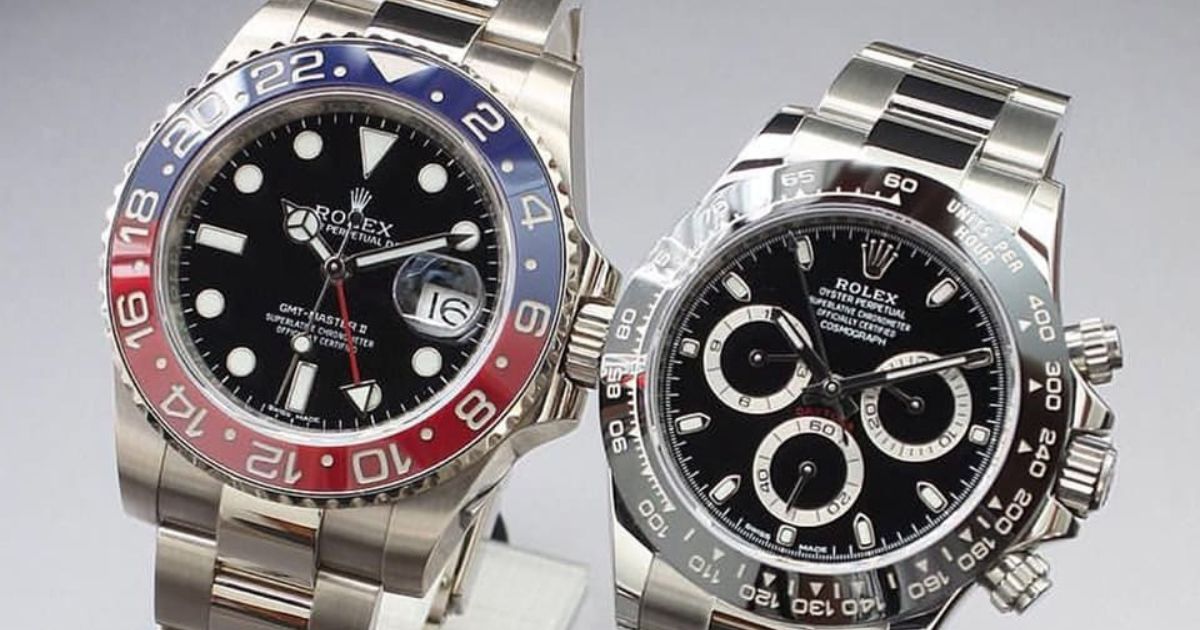
For watch enthusiasts, few things are as thrilling as acquiring a Rolex. Yet, with its prestige comes the unfortunate reality of counterfeits. Learning to authenticate a Rolex is an essential skill for any collector or buyer. This step-by-step guide will walk you through the key details that separate a genuine Rolex from a replica.
1. Start with the Weight and Feel
A genuine Rolex has a substantial, solid feel due to its high-quality materials. Most models are crafted from 904L stainless steel, gold, or platinum—all of which are dense and heavy. Counterfeits often use lighter, cheaper alloys. When you pick up a real Rolex, it should feel robust and balanced, not hollow or lightweight.
2. Examine the Case Back
One of the easiest first checks: look at the case back. Most Rolex watches (with rare vintage exceptions) have a smooth, solid case back without any engraving, viewing windows, or logos. If you see a clear case back, etched logos, or detailed engravings (aside from rare special editions), it’s likely a fake. Rolex reserves engravings for the inner case back, not visible without opening the watch.
3. Inspect the Dial Details
The dial is where Rolex’s impeccable craftsmanship shines. Use a loupe for a close look:
- Printing: Text should be sharp, clean, and evenly spaced. No smudges or uneven lettering.
- Hour Markers and Hands: These should be perfectly finished, with luminous material evenly applied. On many models, the hour markers are applied white gold, even on steel watches.
- Rolex Crown Logo: At 12 o’clock, the coronet should be finely detailed and properly proportioned. On most modern dials, it’s applied, not printed.
- Cyclops Lens: The date magnifier should magnify the date 2.5x. On fakes, magnification is often weaker. Also, the cyclops is integrated into the crystal—not glued on—and should be perfectly centered over the date.
4. Check the Movement
The smooth sweep of a Rolex seconds hand is legendary. Rolex uses perpetual mechanical movements, so the seconds hand moves in tiny, continuous steps, not ticks. If you see a stuttering or ticking seconds hand (common in quartz fakes), it’s not authentic. For a definitive check, a watchmaker can open the case back to inspect the movement—genuine Rolex movements are finely decorated and engineered.
5. Look at the Serial and Model Numbers
Between the lugs at 12 o’clock (model number) and 6 o’clock (serial number), you’ll find finely engraved characters. These are crisply etched with a fine, precise technique. On many fakes, they are lazily engraved, acid-etched, or even laser marked. The font and depth should be clean and consistent. Note: The location of these engravings has changed over the years (they’re now on the inner rehaut, or flange, on modern pieces), so research the specific model’s era.
6. The Rolex Crystal
Rolex uses sapphire crystal (or acrylic on some vintage pieces). Sapphire is extremely scratch-resistant. A good test: gently tap the crystal with your fingernail. Sapphire produces a clear, solid sound compared to mineral glass. Also, on most models since 2002, the crystal has a tiny laser-engraved coronet at the 6 o’clock position, visible under magnification and at an angle. It’s subtle and hard to replicate accurately.
7. Bracelet and Clasp Quality
The bracelet should feel solid, with links that move smoothly but not loosely. Check the clasp:
- The Rolex crown logo on the clasp should be finely detailed and properly aligned.
- The folding mechanism should engage with a firm, precise click.
- On modern Oyster bracelets, the Easylink extension system operates smoothly.
- Engravings inside the clasp (like “Rolex,” “Steelinox,” or “750”) should be crisp and clean.
8. The Triplock Crown Seal
On sport models like the Submariner, the winding crown screws down with Rolex’s Triplock system. When unscrewed, you should see a rubber gasket ring. The crown itself should be finely machined with the Rolex coronet. On genuine pieces, the coronet is detailed and three-dimensional; on fakes, it’s often flat and poorly defined.
9. Luminous Material
Rolex uses its own high-quality luminescence (Chromalight on modern pieces). It should glow a strong, consistent blue in the dark. Poor-quality lume that’s uneven or dim is a red flag.
10. Seek Professional Verfication
When in doubt, take the watch to an authorized dealer or a trusted, independent watchmaker. They have the tools and expertise to perform a thorough authentication, including opening the case to inspect the movement and internal engravings.
Authentication is a mix of macro observation and microscopic detail. Familiarize yourself with the specific model you’re examining—Rolex has nuanced variations across references and years. With practice, you’ll develop an eye for the impeccable standards that define this iconic brand.
Remember: patience and due diligence are your best tools. Happy collecting, and may your next Rolex be as genuine as your passion for horology.