



Our Magazine
Lume 101: A Guide to Watch Dial Luminescence

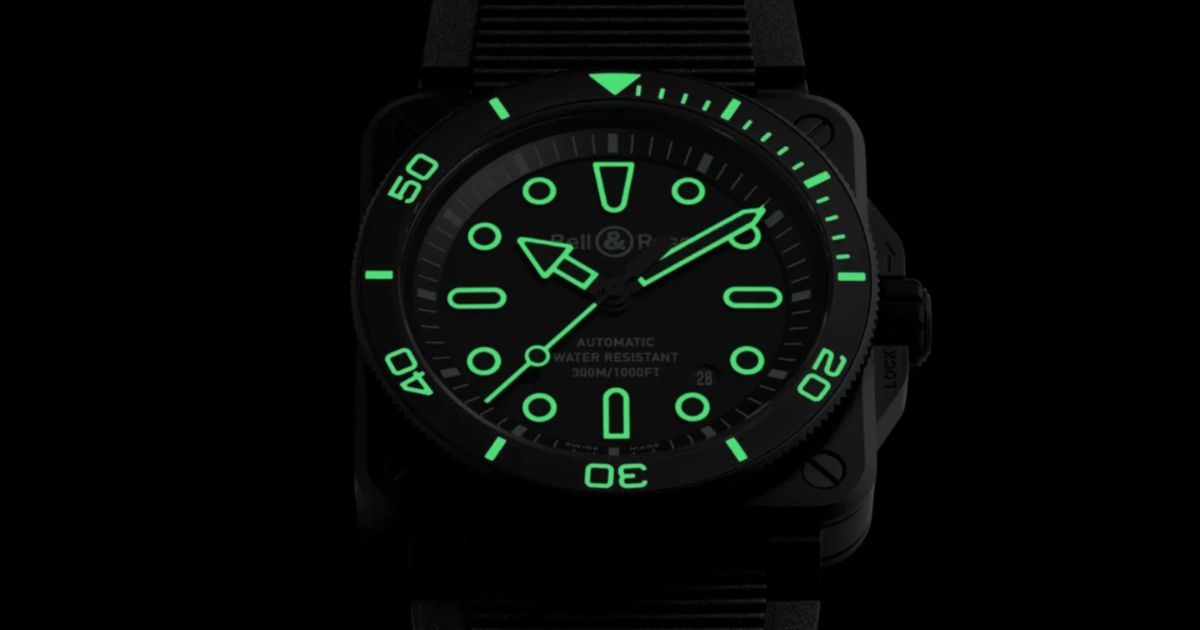
You’re in a pitch-black cinema, driving through a moonless night, or simply checking the time under a restaurant’s dimmed lights. In that moment, a sophisticated tool on your wrist transcends its daytime jewelry status and reveals its true, functional soul: its luminescence. That soft, ethereal glow emanating from the hands, indices, and bezel isn’t just a cool party trick; it’s the culmination of over a century of material science, craftsmanship, and a relentless pursuit of legibility. Welcome to the essential guide to watch dial luminescence, or as we aficionados call it, lume.
The “Why”: A Legacy of Legibility
The story of lume begins not in a luxury watchmaker’s workshop, but in the trenches of World War I. Soldiers needed to synchronize attacks in the dark without revealing their position with a lit match. The pocket watch was useless. Thus, the trench watch was born, featuring radium-painted numerals on a dial that could be read at a glance. This established the core, non-negotiable principle: a tool watch must be readable in all conditions. From pilots and divers to explorers and surgeons, lume became a critical safety and precision feature. Today, while we may not rely on our dive watches to avoid decompression sickness, that legacy of functional elegance remains a hallmark of true watchmaking integrity.
The “Watch”: A Journey Through Materials
The evolution of lume is a fascinating journey through chemistry, marked by both brilliance and caution.
- Radium (Early 1900s – ~1960s): The original superstar. Radium-226, a radioactive element, was mixed with zinc sulfide to create a paint that glowed continuously without needing a “charge” from light. Applied by hand—often by women known as “Radium Girls“—it created the iconic, rich glow seen on vintage military and professional watches. However, its severe radioactivity (harming those painters and eventually degrading the dial) led to its demise. Today, finding a watch with original, intact radium lume (Ra on the dial) is a piece of history, but one best admired from a distance and understood in context.
- Tritium (~1960s – ~1990s): The safer successor. Tritium is a radioactive isotope of hydrogen, but its beta-particle emissions are much weaker and can be safely contained. It was used in gaseous form in tiny vials (as seen in Ball Watch‘s modern H3 system) or, more commonly, mixed into paint. Watches from this era are often marked with T<25 or SWISS T<25 on the dial. Unlike radium, tritium does degrade over its ~12.3-year half-life, eventually turning a creamy patina and losing its glow—a characteristic loved by vintage collectors.
- Luminous Compounds: The Modern Era (1990s – Present)
- Super-LumiNova & LumiBrite: The current industry standards. These are non-radioactive photoluminescent pigments. They are strontium aluminate-based compounds “charged” by exposure to light (natural or artificial) and then release that energy as a bright, long-lasting glow. The key advantages are safety, stability, and control. Watchmakers can produce them in various grades (Standard, Grade X1, C1, C3 – which is a vibrant green, C7 – blue, C9 – orange) and even in different colors for aesthetic flair. The glow is intense initially but fades predictably over hours.
- Chromalight, Lumibrite, Blue Chromalight: Brand-specific variants. Rolex’s Chromalight (introduced 2008) glows a distinctive, long-lasting blue. Seiko’s LumiBrite is renowned for its intensity and duration. These are all proprietary formulations of the same basic photoluminescent technology, each house tweaking the recipe for their desired color, intensity, and longevity.
The “How”: Application as an Art Form
How lume is applied is a direct indicator of a watch’s quality and intended purpose.
- Painted Lume (Pip): The most common method. The lume compound is painted onto the dial elements. On entry-level pieces, this might be simple dots. On high-end watches, it involves meticulous hand-painting of indices and hands, often in multiple layers for maximum effect.
- BGW9 vs. C3: These are specific Super-LumiNova codes. BGW9 emits a stunning, crisp blue-white glow (though the material itself often looks greyish-white in daylight). C3 provides the classic, high-intensity green glow. The choice affects both daytime aesthetics and nighttime personality.
- Lume Plots & Blocks: Common on dive and tool watches. These are three-dimensional containers (often made of ceramic or polished metal) filled with lume material. They offer greater volume for a brighter, longer-lasting glow.
- Fully-Lumed Dials & Skeleton Lume: The pinnacle of the craft. Some brands, like Panerai (a lume legend) or Ball Watch, offer dials where the entire surface is coated in lume. Others, like Richard Mille or MB&F, use luminous material on the skeletonized structure of the movement itself, creating a breathtaking architectural glow.
Appleciating Lume as a Connoisseur
For the seasoned collector, evaluating lume is a critical part of the assessment.
- Evenness & Precision: Under UV light (a fun tool for enthusiasts), check if the application is even, with no overflow or thin spots. The edges should be razor-sharp.
- Color & Charge Time: Note the color of the glow. How quickly does it charge under a brief light exposure? A high-grade lume will “sativate” almost instantly.
- Longevity: The tru test. Charge the watch and place it in a dark room. Note the initial brightness and check it again after 3, 6, and 8 hours. A quality lume should remain legible throughout the night.
- The “Lume Shot”: It has become a ritual in watch photography—capturing that perfect, dramatic glow in low light. It’s the watch’s hidden face, revealed.
Beyond the Tool: Lume as Aesthetic Signature
In modern haute horology, lume has transcended pure utility. It’s a design element. Brands use it to create contrast, highlight complications, or establish a unique identity. The cool blue of a Rolex Deepsea, the vibrant green of a Seiko diver, or the multi-colored lume on a Breitling Emergency‘s bezel all communicate a specific brand language and purpose.
Conclusion: The Soul of the Tool Watch
Lume is where the romantic history of watchmaking collides with cutting-edge material science. It is a silent guardian, a functional art, and a direct link to the daring endeavors that drove horological innovation. The next time you find yourself in the dark, glance at your wrist. That gentle, persistent glow is more than just light; it’s the enduring spirit of legibility, a whisper from the past assuring you that in the deepest night or the ocean’s abyss, time, and the craftsmanship that captures it, will always find a way to shine.
So, charge up those dials and appreciate the glow. It’s a fundamental chapter in the story on your wrist.