



Our Magazine
Panerai: From Italian Naval Commandos to Luxury Icon

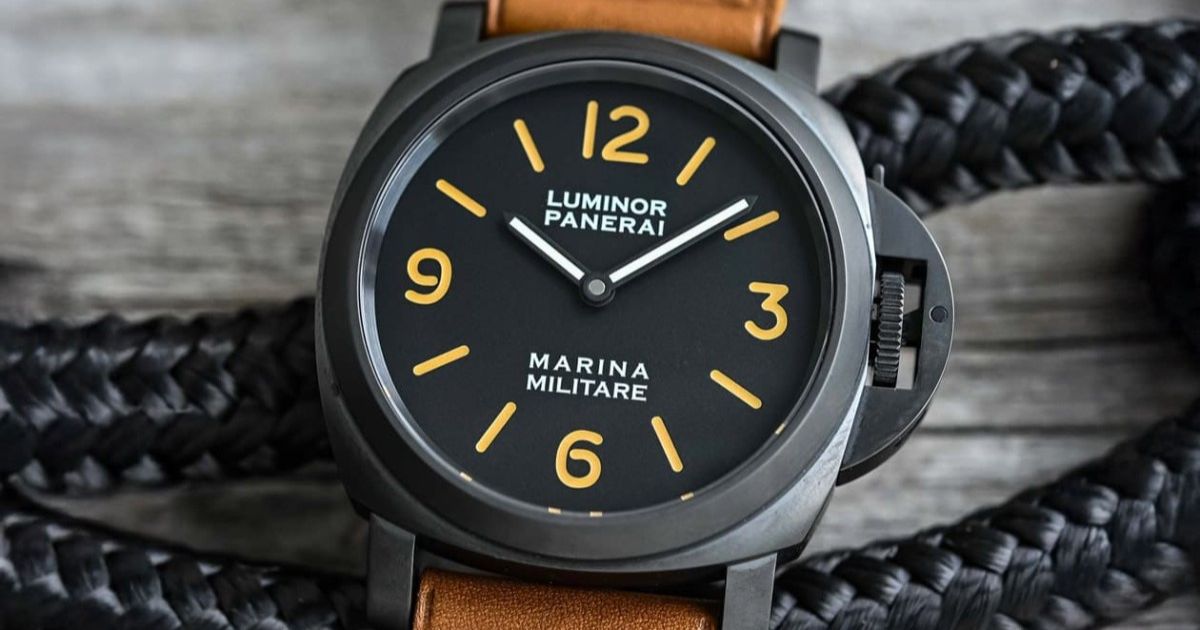
For the discerning watch enthusiast, few names evoke as potent a blend of rugged history, bold design, and modern luxury as Officine Panerai. Its journey is not a simple tale of incremental horological refinement, but a dramatic saga that leaps from the shadowy depths of naval warfare to the sun-drenched wrists of global tastemakers. This is the story of how a specialized instrument became a cultural icon.
The Silent Service: Birth of a Tool (1860-1935)
Our story begins not with Panerai as a watchmaker, but as a supplier to them. Founded in Florence in 1860 by Giovanni Panerai, the original shop was a workshop, watchmaking school, and retailer. It supplied precision instruments to the Royal Italian Navy. The pivotal turn came in the early 20th century as naval warfare evolved, creating a demand for specialized equipment for the Navy’s elite assault commandos, the Gamma men.
These operatives needed a tool for night-time, underwater missions: raids, reconnaissance, and sabotage. Their watch had to be legible in pitch-black conditions, withstand immense pressure, and be extremely robust. By the 1930s, Panerai found its solution by ingeniously combining two elements: exceptionally luminous dials and robust movements from a Swiss partner, Rolex.
The result was the Radiomir. Its defining features were born purely from function:
- The Radiomir Luminous Compound: Panerai patented a paste using radium-based powder (hence the name “Radiomir”), offering unprecedented luminosity for underwater readability.
- The Cushion Case: A large (47mm by today’s standards), sturdy, cushion-shaped case made from a single block of steel, providing water resistance and strength.
- Wire Lugs: Welded to the case to handle the stress of straps and underwater use.
- Sandwich Dial: A later but crucial innovation (seen in the Luminor line that followed). Two metal plates with cut-out numerals were layered, with luminous material sandwiched between. This allowed for greater volume of material and long-term consistency as the top layer protected it.
- Minimalist, Legible Dial: Huge, bold numerals and clear, pencil hands. No decoration—just information.
These were not watches; they were instruments. Issued in tiny numbers, they were known only to the military and Panerai itself. The secret tool was born.
The “Luminor” Evolution and Dormancy (1940-1990s)
With World War II, the need intensified. The Radiomir design evolved into what we now know as the Luminor. The key innovation was a new, safer luminous substance based on Tritium (prompting the name change). But the most iconic addition was the crown-protecting bridge.
This patented, lever-operated device locked the crown against the case, drastically improving water resistance and shock protection. This singular, bold design flourish—functional yet architectural—would become Panerai’s most recognizable signature.
For decades after the war, Panerai instruments slumbered. The company continued its work as a military supplier, but its watches were virtually unknown to the public. They were ghosts of a heroic past, tucked away in Florentine archives and the drawers of a few ex-commandos. The stage was set for a rebirth that would take the watch world by storm.
The Sylvester Stallone Effect and Luxury Explosion (1990s-Present)
In the late 1990s, the mechanical watch was rediscovering its soul after the Quartz Crisis. The stage was perfect for something different. Enter Sylvester Stallone.
Legend has it that while filming in Rome, Stallone discovered a vintage Panerai in a jeweler’s window. He was captivated by its unique, masculine presence. He purchased several, even commissioning a limited edition—the “SlyTech” Luminor—for friends and crew. When the world saw this Hollywood icon wearing this mysterious, oversized watch, curiosity exploded.
Panerai seized the moment. In 1993, they released their first limited commercial collection: the Luminor, Luminor Marina, and Mare Nostrum. The response at the 1997 Baselworld fair was seismic. Here was a watch with undisputed military heritage, a design language unlike anything else (oversized, bold, minimalist), and an instant, cool backstory. It defied the prevailing norms of dress watches.
The Richemont Group acquired Panerai in 1997, providing the resources for global expansion. Crucially, they understood the brand’s essence: heritage and identity. They nurtured the core design codes while developing sophisticated in-house movements (starting with the P.2002 calibre in 2005), moving from a historic “module-maker” to a respected manufacture.
Decoding the Panerai Design Language: Why It Works
For learners, understanding Panerai’s appeal lies in decoding its consistent design grammar:
- The Silhouette: The cushion case is unmistakable. It’s a statement of presence and heritage.
- The Crown Guard: That signature bridge is more than a device; it’s the brand’s shield and logo. It speaks of adventure and engineering.
- Dial Clarity: The sandwich dial ensures deep, three-dimensional luminosity. The layout remains clean, focused, and incredibly legible—a hallmark of tool-watch DNA.
- Bold Proportions: Panerai pioneered the modern large watch trend. Wearing one is an experience—it feels substantial and purposeful.
- The Strap Culture: Panerai popularized the quick-release strap system. Changing from a leather strap to rubber or canvas completely transforms the watch’s character, from elegant to sporty, making it versatile. The strap is an integral part of the Panerai identity.
The Modern Collection: Honoring the Code
Today, Panerai skillfully navigates its twin pillars: History and Innovation.
- The Radiomir & Luminor (Base): Direct descendants of the originals. These are for the purist—the essence of the Florentine story.
- The Submersible: A logical evolution. Once part of the Luminor line, it’s now its own collection, embracing the brand’s diving destiny with unidirectional bezels and extreme water resistance.
- The Luminor Due: A masterstroke. It takes the iconic form and elegantly slims it down for dressier occasions, proving the design’s versatility.
- Material Innovation: Panerai constantly experiments, using Bronzo (which develops a unique patina), Carbotech (lightweight, scratch-resistant carbon composite), Fibratech (a mineral-based composite), and even EcoTitanium, reflecting a commitment to advanced materials that suit its tool-watch ethos.
Conclusion: More Than a Timepiece
Owning a Panerai is not just about telling time. It is about wearing a chapter of history—a piece of equipment designed for heroes. It connects you to the murky waters of La Spezia harbor and the daring of the Gamma men. Yet, it is also a triumph of modern luxury marketing, a testament to the power of a unique design narrative.
From its birth as a secret tool for commandos to its status as a bold luxury icon, Panerai’s journey is unique in horology. It teaches us that authenticity is powerful, that design born from function can be timeless, and that sometimes, the most compelling stories come not from the quiet Swiss vallées, but from the passionate heart of Italy and the depths of the sea. For the collector, it remains a compelling, unmistakable, and deeply historical choice on the wrist.