



Our Magazine
The Cosmograph Daytona: A Legend on the Wrist and the Track

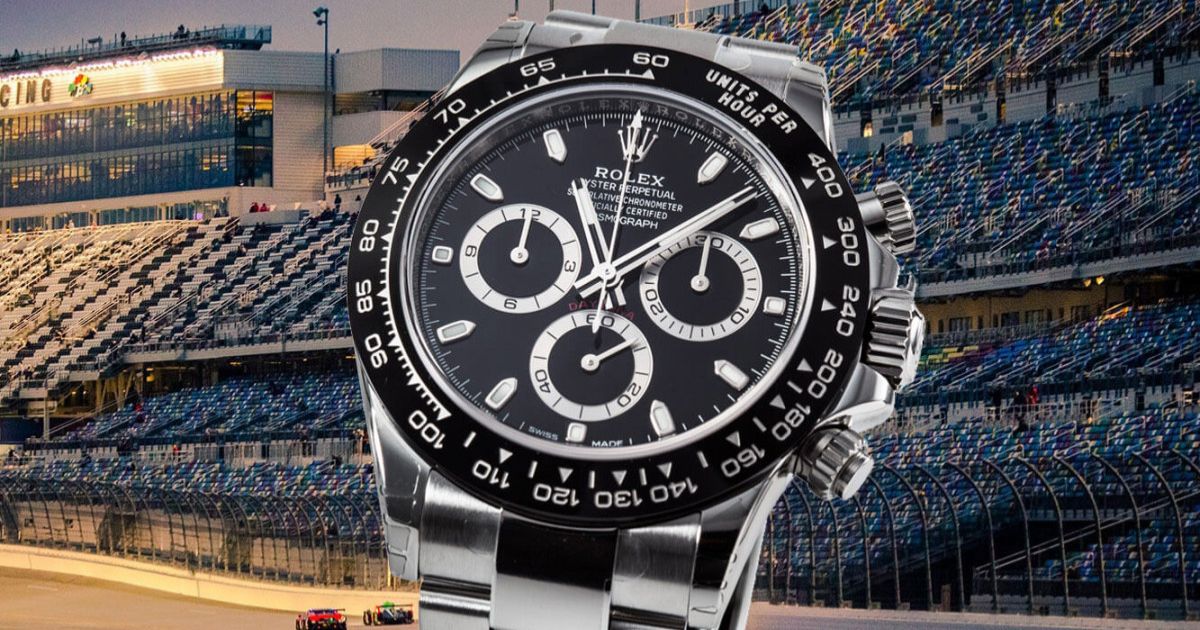
In the world of luxury timepieces, few names evoke as much reverence, passion, and storytelling as the Rolex Cosmograph Daytona. It’s a watch that has transcended its function as a mere chronograph to become a cultural icon, a symbol of human achievement, and a grail for collectors worldwide. Its story is a compelling tapestry of motorsport heritage, technical innovation, and an almost mythical evolution. Whether you’re a seasoned horology enthusiast or a budding learner, the Daytona’s journey offers a masterclass in how a watch can capture the spirit of an era.
Born for Speed: The Genesis of an icon
The story begins not on the wrist of a celebrity, but at the edge of a racetrack. In the early 1960s, the world was captivated by the golden age of motorsports. Rolex, with its long-standing association with precision and performance, saw an opportunity. In 1963, the company introduced Reference 6239, a purpose-built tool watch for professional racing drivers. Its mission was clear: to measure elapsed time and calculate average speed—critical data for any competitor.
This new chronograph wasn’t initially called the “Daytona.” That legendary name appeared on the dial only a few years later, in a move that would cement its destiny. Rolex forged an official partnership with the Daytona International Speedway in Florida, one of the most prestigious and demanding circuits in the world. The “Daytona” script was added above the sub-dials, and a legend was officially christened. This was more than branding; it was a statement of intent. The watch was now intrinsically linked to the courage, precision, and high-speed drama of endurance racing.
Anatomy of a Champion: Decoding the Daytona Design
What makes the Daytona’s design so enduring and instantly recognizable? Let’s break down its key elements, a language that has remained remarkably consistent over six decades.
- The Tachymeter Bezel: This is the Daytona’s defining feature. The engraved bezel, typically in ceramic or metal, is a tachymetric scale. It allows a driver to measure average speed over a known distance. The operation is pure, elegant mechanics: start the chronograph at a mile marker, stop it at the next, and the central seconds hand points to the average speed on the bezel. It’s functional poetry.
- The Tri-Compax Layout: The dial features three subsidiary counters: a 30-minute recorder at 3 o’clock, a 12-hour recorder at 9 o’clock, and a small running seconds at 6 o’clock. This symmetrical, balanced configuration is not only highly legible under pressure but has become an aesthetic benchmark for all chronographs.
- The Oyster Case: Housed in Rolex’s legendary Oyster case, the Daytona is a paragon of robustness and water resistance. Its solid construction protects the delicate movement within, embodying the “tool watch” ethos it was born from.
- The Pushers and Crown: The screw-down chronograph pushers and winding crown are a Rolex innovation. They ensure the watch remains waterproof and prevent accidental operation—a crucial feature when the watch might be subjected to shocks and vibrations in a racing cockpit.
The Heart of the Matter: The Movement Revolution
For much of its early life, the Daytona housed high-quality, manually-wound movements sourced from specialist manufacturers like Valjoux. These “pre-Paul Newman” and “Paul Newman” Daytonas (named for the distinctive art dial variant famously worn by the actor) are now the stuff of auction legend.
However, a pivotal chapter in the Daytona saga began in 1988 with Reference 16520. Rolex took a monumental leap by introducing its first self-winding chronograph movement, Caliber 4030, based on a Zenith El Primero base. This brought modern convenience to the legend.
The true horological milestone came in 2000 with Reference 116520. Rolex unveiled the entirely in-house designed and manufactured Caliber 4130. This vertical-clutch, column-wheel chronograph movement was a masterpiece. It was more efficient, slimmer, incredibly robust, and boasted a superior 72-hour power reserve. The in-house calibre transformed the Daytona from a revered icon into a top-tier technical marvel, silencing any lingering doubts about its mechanical pedigree.
More Than a Watch: A Cultural Phenomenon
The Daytona’s status was magnified beyond the track by its association with iconic figures. Paul Newman’s personal Daytona, gifted by his wife Joanne Woodward, became the most famous watch in the world after it sold at auction for a record-breaking sum. His association lent the watch an aura of cool, rebellious style.
From race car drivers like Sir Jackie Stewart to cultural titans, the Daytona became a symbol of success and discernment. Its scarcity, driven by meticulous production methods and immense demand, further fueled its mythical status. Waiting lists grew, and the watch became a trophy, representing patience and achievement.
The Modern Chapter: Innovation Meets Tradition
Today, the Cosmograph Daytona continues to evolve while honoring its DNA. The introduction of the monobloc Cerachrom (ceramic) bezel was a major advancement, making the scale virtually scratch-proof and fade-proof. Rolesor (steel and gold) and full 18k gold or platinum versions offer a spectrum of luxury.
The current generation, with its refined case, impeccable finishing, and the superlative Caliber 4130, represents the pinnacle of this evolution. It’s a watch that can be worn with equal legitimacy while examining a vintage car engine or attending a black-tie gala.
Conclusion: The Eternal Lap
The Cosmograph Daytona is more than a chronograph; it is a narrative on the wrist. Its story encompasses the roar of 1960s race engines, the relentless pursuit of technical perfection, and the timeless allure of iconic design. It teaches us that a truly great watch is born from a clear purpose, refined through innovation, and ultimately elevated by the stories it gathers along the way.
For the learner, the Daytona is a perfect case study. It demonstrates how functionality breeds timeless form, how mechanical innovation drives collectability, and how a name can become synonymous with a dream. It is a legend that started on the track and, through a unique alchemy of history, craftsmanship, and desire, continues its eternal lap around the pinnacle of watchmaking. It is, and will likely remain, the ultimate legend on the wrist.