


Our Magazine
The Panerai Luminor: How a Radiomir Evolution Became an Icon

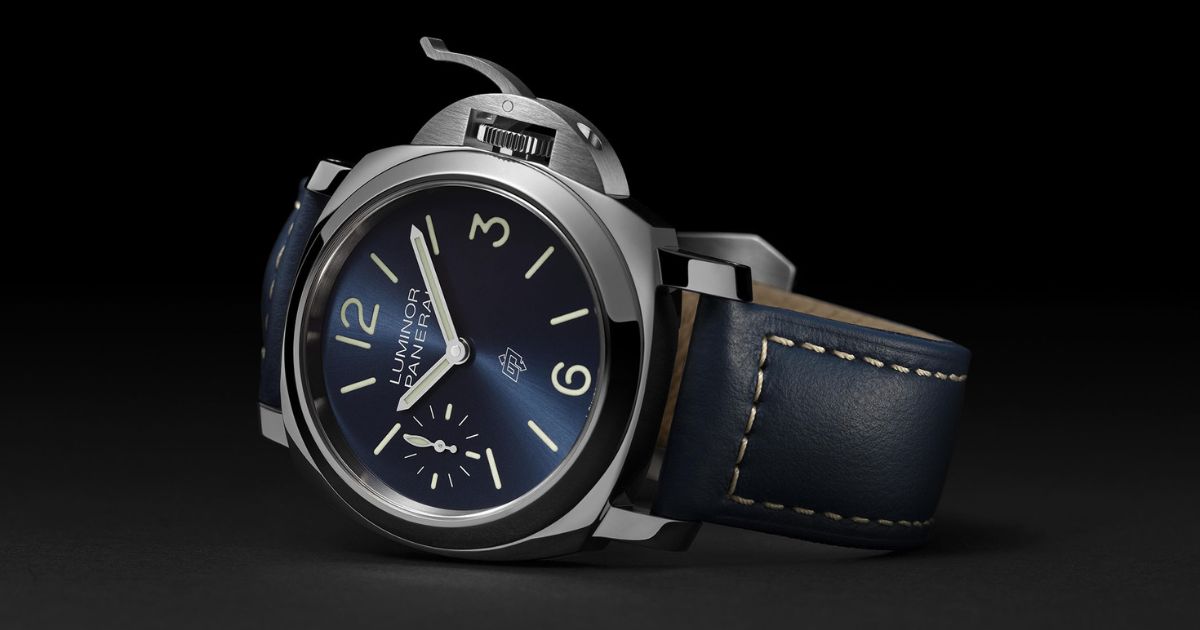
In the world of haute horlogerie, few watches command a presence quite like the Panerai Luminor. Its bold, geometric case, signature crown-protecting bridge, and stark, legible dial are unmistakable. It is a symbol of robustness, history, and a very specific, instrument-born aesthetic. Yet, what many may not fully appreciate is that this icon was not a spontaneous creation, but a vital—indeed, revolutionary—evolution. To understand the Luminor is to first understand its brilliant predecessor, the Radiomir, and the singular problem the Luminor was born to solve. This is the story of how a functional upgrade became a timeless legend.
The Birth of a Tool – The Radiomir Legacy
Our story begins not in the salons of Geneva, but in the depths of the Mediterranean. In the 1930s, the Royal Italian Navy needed a reliable, underwater instrument for its elite commandos, the Gamma divers. They turned to Panerai, a Florentine workshop already known for precision instruments. The resulting watch was the Radiomir.
Its design was pure, purpose-driven brilliance:
- A Large, Cushion Case: Made from sturdy steel, it was oversized (by contemporary standards) for maximum legibility and to accommodate a large movement.
- Wire Lugs: Soldered directly to the case, they ensured the strap could withstand tremendous underwater pressure.
- The Radiomir Dial: This was the star. Coated with a paste based on radium salts, the numerals and hands glowed with unprecedented intensity in the pitch-black abyss, giving the watch its name.
The Radiomir was a perfect tool. However, it had a critical flaw, one inherent to its greatest feature: the radium-based luminous material. Over time, the radium’s radioactivity degraded the painted dial materials, causing them to deteriorate and potentially compromise the watch’s water resistance and longevity. A new solution was needed.
The Evolution – Enter “Luminor”
In the late 1940s, Panerai made a quantum leap. They replaced radium with a new, safer, and more effective luminous substance: tritium-based Luminor. This was a trade name Panerai patented, and it was so significant it would eventually christen the new watch line.
But a new compound required a new canvas. The tritium paste worked best when applied to smaller, three-dimensional surfaces rather than broad, painted areas. This led to a fundamental redesign of the dial furniture: raised, sandwich-style dials where the luminous material was housed between two plates, and cylindrical or baton-shaped hands filled with lume.
The most iconic and visually defining change, however, was born from a different practical need: securing the crown. The screw-down crown was not yet ubiquitous. Water ingress most commonly occurred at the crown stem. Panerai’s engineers devised an audaciously simple and visually striking solution: the crown-protecting bridge.
This patented lever device, anchored to the case, locked the crown firmly in place, forming an almost hermetic seal. It was more than a guard; it was an integral part of the case architecture. This single feature, more than any other, gave the Luminor its unique, masculine, and machine-tool character. The wire lugs evolved into more robust, integrated lugs, making the case a single, solid block of steel.
By 1950, the transformation was complete. The Luminor had arrived, distinguishable from the Radiomir by its crown guard, broader, more integrated lugs, and new dial configurations. It was a superior instrument, ready for duty.
From Obscurity to Icon – The Modern Renaissance
For decades, these watches were known only to a handful of military personnel and collectors. Panerai’s journey to global icon status began in the 1990s. Under new ownership and with a strategy to enter the civilian market, Panerai leaned heavily into the Luminor’s distinct identity.
The Luminor Marina (reference PAM 5218-201/A), launched in 1993, became the cornerstone. It took the classic 1950s design, refined its proportions, and introduced the now-famous “OP” logo and small seconds sub-dial at 9 o’clock. It was untamed, unconventional, and huge by the standards of the day. Its break came when action film star and noted watch enthusiast Sylvester Stallone discovered Panerai, commissioning limited editions and wearing them on screen. The “Rambo connection” ignited a cult following.
Suddenly, the watch world was captivated by this bold, historical, and utterly uncompromising design. The Luminor wasn’t trying to be a slim dress watch or a complex chronograph; it celebrated its identity as a tool-watch-turned-statement-piece. Its design language was a masterclass in reduction:
- The Case & Crown Guard: A sculptural, instantly recognizable silhouette.
- The Dial: High-contrast, minimalist, with layered “sandwich” construction creating a beautiful play of light and depth.
- The Unobstructed View: The crown guard ensured the dial remained clean and symmetrical, free from crown intrusions.
Anatomy of an Icon – Why the Luminor Endures
So, what transformed this evolution of the Radiomir into a true icon?
- A Legacy of Authenticity: Its military provenance is not a marketing myth. Every design element—the crown guard, the sandwich dial, the large size—has a direct, logical link to its functional past. This story resonates deeply with collectors.
- Unmistakable Design Language: In an era of homage and subtlety, the Luminor is unapologetically itself. You can identify it from across a room. The crown guard is not just a feature; it is the feature, a bold architectural statement that defines the watch’s profile.
- The “Wearable Sculpture” Appeal: On the wrist, it feels less like a traditional watch and more like a piece of industrial design. Its heft and unique shape create a powerful tactile and visual experience.
- Evolution Within Fidelity: While Panerai has introduced new movements (in-house calibers, GMT functions, tourbillons), materials (Bronzo, Carbotech, Goldtech), and sizes (the 44mm Luminor Due bringing elegance to the family), the core DNA of the base Luminor remains sacred. It is a testament to the strength of the original 1950s blueprint.
Conclusion: More Than a Guard
The Panerai Luminor teaches us that in watchmaking, true icons are often born from necessity, not just whimsy. It began as a solution: to a radioactive problem, to a waterproofing challenge. The crown-protecting bridge, its most iconic trait, was pure engineering pragmatism.
Yet, in that pragmatism lay genius. The Luminor took the Radiomir’s brilliant foundation and fortified it, both technically and visually. It transitioned from a secret military tool to a symbol of bold, individual style, all while never forgetting its roots. It proves that the most enduring designs are those where form is inextricably linked to authentic function. The Luminor is not merely a watch; it is a chapter in horological history, worn on the wrist—a permanent, radiant evolution frozen in steel.