


Our Magazine
The Submariner: More Than a Dive Watch, A Cultural Icon

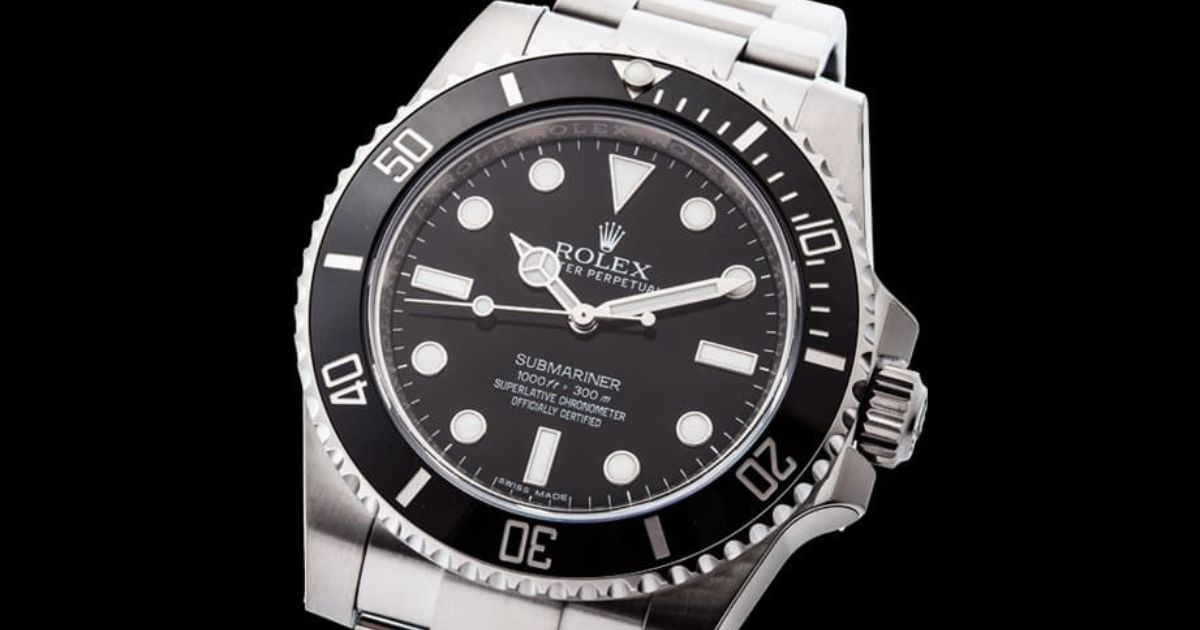
To the uninitiated, it’s a watch. A very handsome, robust, and instantly recognizable watch. But to anyone who has ever felt the pull of horological history, or simply admired icons of design, the Rolex Submariner is a universe unto itself. It is a paradox: a tool born for the abyss that found its destiny on dry land, on the wrists of pioneers, artists, and visionaries. It transcends its specifications to become a cultural touchstone, a silent language of achievement, adventure, and timeless style. This is the story of why the Submariner is far more than a dive watch.
Form Follows a Revolutionary Function
Our story begins not in a boardroom, but in the deep, murky waters of post-war exploration. In the early 1950s, as scuba diving transitioned from military use to a burgeoning sport, the need for a reliable, legible, and waterproof timepiece was paramount. Rolex, already known for its Oyster case, answered the call in 1953 with the reference 6204.
The original blueprint was a masterpiece of purpose-driven design:
- The Oyster Case: A solid, hermetic vessel sculpted from a single block of corrosion-resistant Oystersteel.
- The Triplock Crown: A screw-down crown with a triple-seal system, a fortress against water intrusion.
- The Rotating Bezel: The most iconic element. The 60-minute, unidirectional click bezel with its luminous pip at zero allowed divers to track immersion time with absolute precision and safety.
- The Chromalight Display: Maxi-style hour markers and Mercedes hands filled with luminescent material, ensuring legibility in the pitch black of the ocean depths.
- The Oyster Bracelet: Designed to withstand the corrosive effects of saltwater and the pressure of expansion.
This was no dress watch pretending to be tough. Every component had a mission. It was a tool, and its beauty was a direct result of its brutal utility. This authenticity became the bedrock of its legend.
From Ocean Depths to the Silver Screen
The Submariner’s journey from professional tool to cultural icon was catalyzed by a few key figures. The first was the oceanographer Jacques Cousteau. While he famously wore a Blancpain Fifty Fathoms, the world of underwater adventure he popularized directly elevated the status of all professional dive watches, with Rolex’s Submariner prominently in the mix.
Then came James Bond. In Dr. No (1962), Sean Connery’s 007 wore a Rolex Submariner reference 6538. This was a pivotal moment. Here was the watch not on a diver, but on the ultimate symbol of cool, competence, and suave masculinity. Bond didn’t wear it to track dive time; he wore it because it was indestructible, elegant, and ready for anything. The Submariner became shorthand for a certain kind of hero: rugged, capable, and impeccably styled.
This cinematic adoption marked its first great transcendence. It was no longer just about what it did (withstand 200m of pressure), but about what it represented.
The Language of the Wrist
Beyond the silver screen, the Submariner began to speak a complex language. On the wrist of a rancher, it spoke of durability. On the wrist of a journalist in a conflict zone, it spoke of reliability. On the wrist of an artist or musician, it spoke of an appreciation for unimpeachable design that shuns fleeting trends.
It became the “one-watch collection.” Its magical quality lies in its versatility. The very design that made it legible underwater—the stark contrasts, the clean lines—made it impossibly elegant with a suit. The brushed Oyster case resisted scratches in daily life as well as it did coral reefs. It was at home in a boardroom, on a sailboat, or at a casual dinner. This chameleon-like ability to fit any context made it the ultimate personal accessory for the modern man (and increasingly, woman) who lived a multifaceted life.
Its design evolution has been a masterclass in refinement, not revolution. The core DNA—the case shape, the bezel, the dial layout—has remained sacred. Changes have been subtle: broader lugs, a ceramic “Cerachrom” bezel that is virtually scratch-proof, a slightly redesigned bracelet with a Glidelock clasp for perfect fit over a wetsuit. Rolex understood that to tamper excessively with the icon would be to break the spell.
The Icon in the Modern World
Today, the Rolex Submariner’s status is self-perpetuating. It is a symbol of arrival, a milestone watch often acquired to mark a significant personal or professional achievement. It is a symbol of investment in enduring value, both emotionally and materially. In a world of fast fashion and digital ephemera, it is a solid, mechanical anchor—a connection to a tradition of craftsmanship and real-world utility.
Its cultural footprint is undeniable. It has been name-checked in countless songs, from rap to rock, further cementing its street cred. It is the most counterfeited watch in the world, a dubious honor that speaks volumes about its desirability as a status symbol. To the learned collector, the variations—the “No-date” Submariner (a purist’s dream), the green “Hulk” or “Starbucks” bezel editions—each tell a new chapter in this ongoing story.
Conclusion: The Depths of Meaning
So, what is a Rolex Submariner? It is, of course, still a superlative dive watch. But to see it only as that is to miss the point entirely.
It is a piece of design history, a benchmark of form following function that influenced every watch that came after it. It is a cinematic legend, forever tied to the aura of James Bond. It is a social signifier, communicating taste, success, and an appreciation for the genuinely robust. Most importantly, it is a personal companion, designed not for a safe but for a life lived actively.
The Submariner’s true depth isn’t measured in meters, but in the layers of meaning, history, and aspiration it carries on its sturdy Oyster bracelet. It is a tool that became a talisman, a dive watch that learned to soar. It is, unquestionably, a cultural icon.