


Our Magazine
What is a Chronograph? A Beginner’s Guide

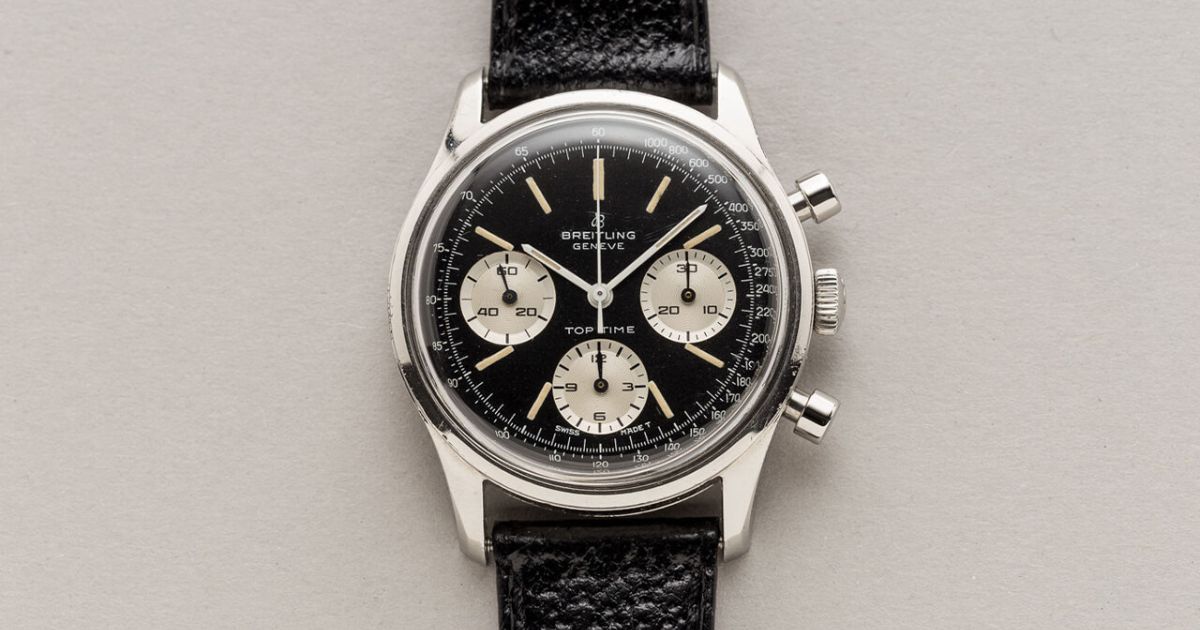
Welcome, watch enthusiasts, to another deep dive into the intricate world of horology. Today, we’re demystifying one of the most popular, functional, and visually captivating complications in watchmaking: the chronograph. More than just a stopwatch on your wrist, a chronograph is a testament to engineering elegance and a cornerstone of luxury watch collections. Whether you’re admiring a vintage classic or a modern marvel, understanding the chronograph is your gateway to a richer appreciation of fine timepieces.
The Essence: It’s All About Measuring Time
At its core, the word “chronograph” comes from the Greek “chronos” (time) and “graph” (to write). Historically, early versions literally “wrote” time by marking a dial with a tiny pen. Today, a chronograph is simply a watch that independently measures intervals of time while still displaying the conventional time of day.
Think of it as two watches in one: the base timekeeping movement runs continuously, while a separate “stopwatch” mechanism can be started, stopped, and returned to zero on command, without interfering with the main time. This ability to measure elapsed time—be it for a morning jog, a perfectly boiled egg, a professional presentation, or the lap of a race car—adds a layer of dynamic interaction between you and your watch.
A Glance at the Anatomy: Key Features on the Dial
Before we delve into the mechanics, let’s identify the key elements you’ll see on a chronograph’s face:
- Central Seconds Hand: This is the hand that measures the elapsed seconds for the chronograph function. It is typically distinct in color or style from the watch’s regular time-telling seconds hand (which is often on a sub-dial).
- Sub-dials (or Totalizers): These smaller dials record the elapsed minutes and usually hours. A classic configuration has three sub-dials: one for constant seconds (of the main time), one for chronograph minutes (often 30-minute totalizer), and one for chronograph hours (up to 12 hours). Some models feature two, or even just one, depending on the movement’s complexity.
- Pushers: The buttons on the side of the case, typically at 2 o’clock and 4 o’clock, are the command centers. The top pusher (2 o’clock) starts and stops the chronograph. The bottom pusher (4 o’clock) resets it back to zero. The sequence is crucial: start → stop → reset. Attempting to reset while the chronograph is running can damage the movement.
- Tachymeter Scale: A common but not universal feature, this scale is often engraved on the bezel or outer dial. It allows you to measure speed over a fixed distance. For example, start the chronograph as you pass a mile marker, stop it at the next, and the central seconds hand will point to your average speed on the tachymeter scale.
The Heartbeat: How It Works – A Symphony of Mechanics
This is where the magic happens. When you press the start pusher, a series of finely calibrated components spring into action. Here’s a simplified look at the two primary systems:
- The Coupled Column Wheel: Considered the more traditional and luxurious mechanism. The column wheel is a tiny, star-shaped gear that acts as the control center. Pressing the pusher rotates this wheel, which engages and disengages levers and clutches to start, stop, and reset the chronograph hands. It’s prized for its tactile, smooth “click” and is often visible through exhibition casebacks, a true delight for connoisseurs.
- The Lateral Cam (or Lever) System: A more modern, robust, and often more service-friendly design. It uses flat, heart-shaped cams and levers to control the functions. While sometimes considered less “romantic” than the column wheel, it is a masterpiece of efficient engineering and is used in many high-end chronographs.
Both systems rely on a clutch to connect the chronograph mechanism to the main timekeeping gear train. Imagine two spinning wheels: the clutch gently brings them into contact to start timing, and separates them to stop, all without jarring the precise oscillation of the watch’s balance wheel.
Variations on a Theme: Types of Chronographs
The basic chronograph has inspired several sophisticated siblings:
- Flyback (Retour-en-vol): Designed for pilots and those needing instant consecutive timings. Normally, you must stop → reset → start to time a new event. With a flyback, a single press of the bottom pusher while the chronograph is running instantly resets and restarts it in one fluid action.
- Rattrapante (Split-Seconds): The pinnacle of chronograph complexity. It features a second central chronograph hand, superimposed over the first. You can stop one hand to record an intermediate time (like a lap) while the other continues running. A second pusher (often at 10 o’clock) causes the stopped hand to “catch up” to the running one, hence the name “split-seconds.”
- Monopusher: An elegant, old-school design where a single pusher (usually integrated into the crown) controls all chronograph functions in sequence: first press to start, second to stop, third to reset. It offers a cleaner case profile and a unique, deliberate operating rhythm.
Why the Chronograph Captivates the Luxury World
Beyond pure function, the chronograph holds a special place in luxury watchmaking.
- A Showcase of Craftsmanship: The density of parts required—often adding 200-300 components to a base movement—demands exceptional skill to assemble, finish, and regulate. The sight of a beautifully decorated chronograph movement, with its blued screws, perlage, and column wheel, is a window into micro-engineering art.
- Historical Pedigree: Chronographs are intertwined with 20th-century history—from aviation (Breitling’s Navitimer) to motor racing (Rolex Daytona, TAG Heuer Carrera) and space exploration (Omega Speedmaster Professional). Owning one connects you to these narratives of human endeavor.
- Dynamic Aesthetics: The layered dials, contrasting colors, and multiple hands create a face full of purpose and visual intrigue. It’s a balance of legibility and complexity that defines sporty elegance.
For the Beignner Collector: How to Engage
When you first handle a chronograph, take a moment to play with it. Feel the feedback of the pushers—the crispness of a column wheel or the firm assurance of a cam system. Listen to the almost silent activation. Watch the smooth sweep of the central seconds hand and the instantaneous jump of the minute totalizer. It’s an interactive experience that a simple time-only watch cannot provide.
Remember the Golden Rule: Always reset your chronograph only after it has been stopped. This simple habit protects the delicate heart of your mechanical companion.
Conclusion
A chronograph is far more than a tool; it is a celebration of human ingenuity on your wrist. It represents a watchmaker’s challenge mastered and a wearer’s invitation to interact with time itself, not just observe it. As you explore luxury watches, let the chronograph be a focal point of your journey—a complication where technical prowess and passionate storytelling beautifully collide.
Now, go forth and time something wonderful.